Intervu Painting the Roses Red
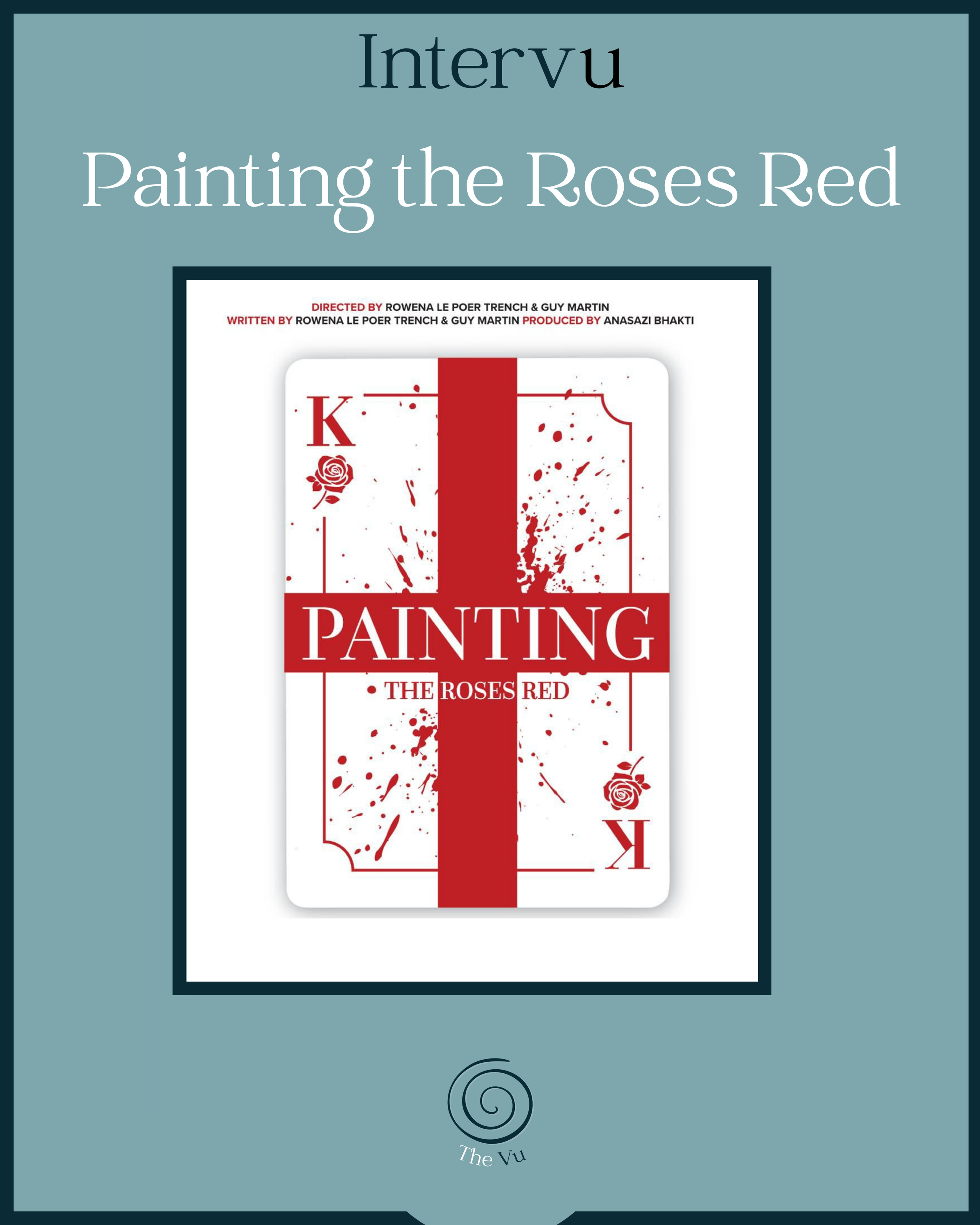
“Painting the Roses Red”
On a Monday afternoon, I sat down with Rowena, Guy and Sazi to talk to them about their brand-new company ‘Kalopsia Theatre’ and their first play: Painting the Roses Red as it gears up for its upcoming run at the Edinburgh Fringe Festival.
As done by prior Vu Journal interviews, I will stylise my questions and comments in bold while the group’s responses will be italicised.
Joining me straight after a busy rehearsal day, the trio were all smiles and enthusiasm as I kicked off the discussion by asking them to introduce themselves as creatives.
“Perfect! I’m Rowena Le Poer Trench. I’m an artist in many different senses. I’m an actor, director, writer and I recently finished training at the Jacques Lecoq School Physical Theatre in Avignon, France and… yeah, that’s me!”
Guy follows on. “I’m Guy, at heart I’m a scientist, so I’m doing a chemistry degree at the moment,” he admits with a chuckle. “But as one of my many much-loved hobbies, I do lots of drama and theatre so Rowena and I have directed shows before, and that’s where my sort of creative love started.”
You know, I do meet a lot of chemistry students in theatre! It seems to be a pipeline.
“Really?”Guy and Rowenaask in simultaneous intrigue.
It’s always chemistry too, never physics or biology.
“Our next show needs to be written about chemists so we can really do a full circle,” Sazi jests as she introduces herself.
“Hello! I’m Anasazi Bhakti, I’m currently based in Chicago but met Rowena at Lecoq in the south of France so that’s how I got connected with her. I was living there for the last two and a half years, but I’m back stateside and kind of going back and forth between here and England. I am a performer, writer, director and most recently puppeteer! I do lots of different forms of performance and, prior Lecoq, I was on the stages of Second City, which is a comedy house in Chicago that kind of filters into our Saturday Night Live. But for this particular performance, I am taking on the role of producer because I’m afar for part of the time, just helping support Rowena and Guy, but excited to be building this whole company with them. My plan in the next couple years is to get back to Europe, so I’m taking a looooonngg vacation in Chicago.”
I chuckle at the comment, a question forming in my mind as I think about Sazi’s mention of the trio’s company.
Speaking of your theatre company, out of curiosity, why Kalopsia? I know it’s Greek and means something like ‘more beautiful than it seems?’
“Rowena?” Sazi looks to Rowena.
Was it Rowena?
“Well, Guy found the word!” Rowena remembers, looking to Guy.
“Yeah…” Guy starts to recount. “It was one of our many meetings where we were hunting round for words, and we sort of went down this hole of Greek words, and we were loving it, and then I found ‘Kalopsia’ and I was just like, that’s so – I love the word, first. Then I read its meaning, and I was just like that’s so cool and – I don’t know – it just really connects and resonates with the sort of theatre that we’re trying to make…”
As Guy ends his sentence, Sazi picks it up seamlessly:
“I mean, especially with this first piece we’re doing, the topics we collectively want to be speaking about, maybe harder topics, very relevant topics, maybe a little uncomfortable for the audience, and then I think also Rowena and I’s most recent training at Lecoq, putting over those kind of rose coloured glasses visually for the audience to make these more challenging themes easier to digest. I think that we do that really well in this production, the silliness and whimsy - pulling from Lewis Carroll’s Alice in Wonderland -with this really heavy topic, you know, in the UK and in the US around immigration and what it means to belong and what is home. So I think that’s the word, when it was brought to the group, it really resonated with all of us and with each production we want to do. There’s a little bit of the lens we want to do it through.’
Rowena raises her hand slightly, “And I’ll just add on that in the same way - talking about the roses tinted glasses - as we, in some moments, are allowing our audience to sort of wear those glasses and see things through that lens, maybe accessing these difficult themes more easily, we’re also removing those glasses and saying ‘you may choose to see this for how you want to see it’ and adding more context around it.”
Rowena also mentions an experience of hers from Lecoq; a comment she received during an improv class from one of her teachers that contributed to the word ‘Kalopsia’ being chosen for the company.
“[the teacher] said ‘stop trying to make everything so beautiful, you don’t need to be beautiful on stage.’ So, there’s the element of showing things for the raw truth that they are. So yes, more beautiful to digest it at times, but also sometimes just – truthful and raw and…”
“Ugly,” Guy adds, which prompts a nod from Rowena.
“Ugly! Yeah, exactly, and putting that feeling into the audience of I’m uncomfortable and I’m complicit in what’s happening on stage.”
That makes a lot of sense and such a great theatre name! So, let’s talk more about Painting the Roses Red. It’s your first theatre piece and also your first time going to the Edinburgh Fringe, I believe. How excited are you?
Rowena and Guy reply simultaneously.
“Very.”“Incredibly.”
“Yeah, it’s been…” Rowena contemplates. “Yeah, it’s definitely been more stressful as well, of course, than expected. We’re learning so much.”
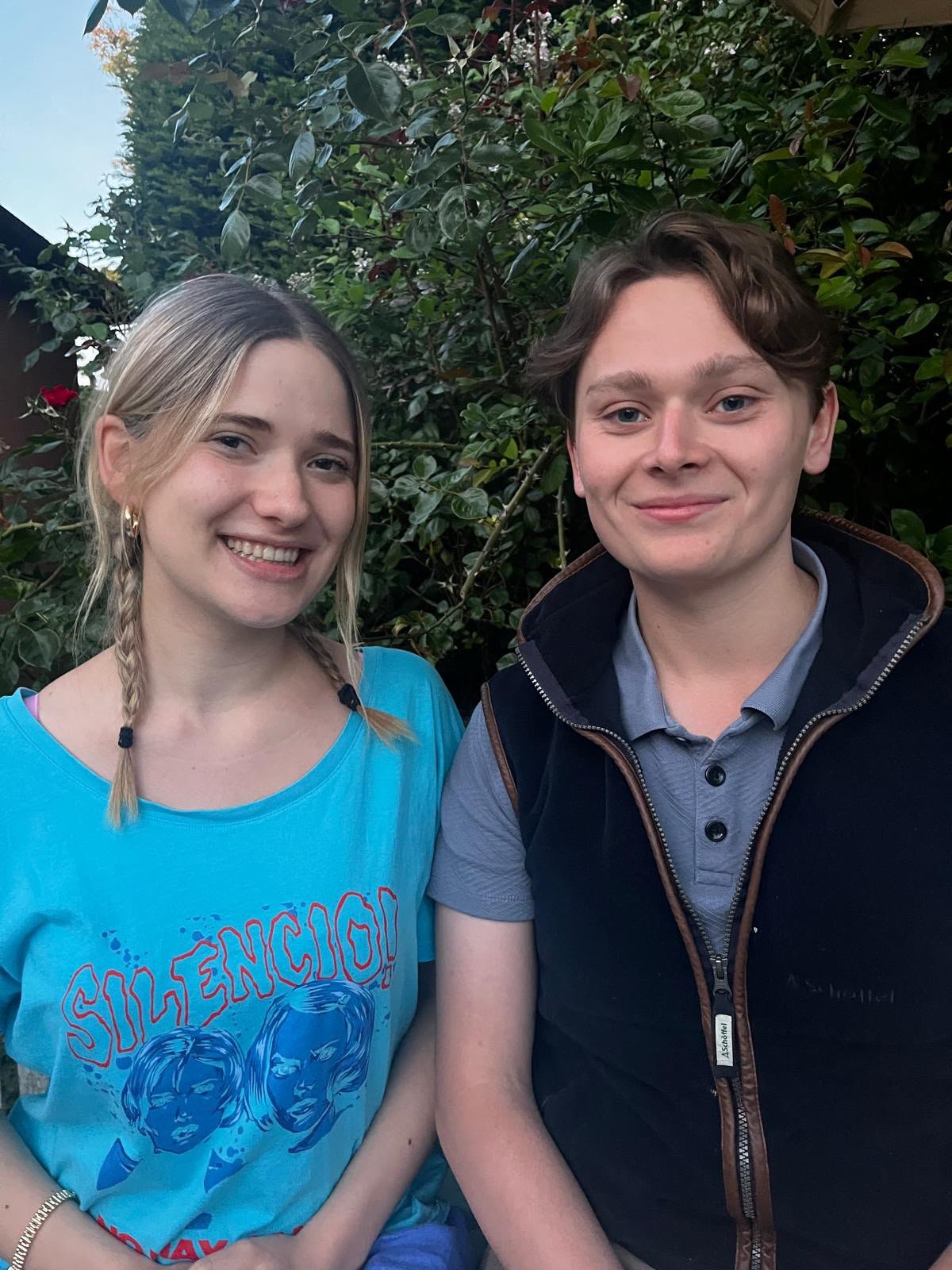
“Rowena and Guy”
I can imagine. Is it all mostly nerves and excitement that you’re feeling?
“I feel fulfillment,” Guy tells me. “We’ve put so much time into this piece, and having it shown at the Fringe is such a milestone.”
Sazi adds to Guy’s comment. “And we’ve had two residencies as well. Our first residency, back in April, which was wonderful, was just a week of us devising and collaborating in the English countryside together, and now our second residency ends in a performance,” she pauses briefly. “I mean, what I’m most excited about is just to be with the group in Scotland. Be around everyone and creatives and really see the feedback from audiences and how [the play] resonates with people in different ways.”
Sazi delves deeper into the idea of an audience and how she is excited for their reactions. She says how it will amplify the play’s “ever-changing” essence and process alongside, as a company, allow them to “adjust and figure out what works and resonated and what doesn’t.”
Rowena jumps in. “The audience is really important to us – so we chose to do less rehearsal time. Overall, it’s two weeks of having the actors, which feels sort of insane.” She says with an amused bluntness.
“But It’s important we share our work with an audience, because it will help us going forward. We’d rather do a work-in-progress showing after two weeks and be brave that we are, you know, showing our baby to strangers but not being precious about our work and put our egos aside and say, ‘how does this make you feel? Okay, is that what we wanted? Is that what we intended the audience to feel or take out of it?”
A unanimous hum comes from Guy and Sazi. Rowena then shifts her focus.
“I’m a perfectionist. I know that you are too, I’m pretty sure you are too –” she goes round the group as they laugh in agreement. “I think it’s good that we are sharing our work early on, as opposed to working on it for a year and keeping it hidden.”
The trio champion the audience’s perspective, both while conceptualising and performing their work. It links to the following question on my list, that being how they would describe the overarching themes and stories of the play to others?
“Well, I’ll start by saying that we were originally inspired by, last August-September, all of the St. Geroge’s flags that were up. All of the Union Jacks. And I remember just kind of watching it slowly grow and grow and grow and think ‘wow, this is – this is crazy.’ But I was really struck by just red being painted on anything that was white. White roundabouts, white signs, even white chalk horses on the hills nearby having red material stapled to them. It’s just such a striking visual, this idea of something being imposed on, you know, it’s one thing the flags, but it’s when red started creeping into anything that was white. I felt like ‘okay this topic needs to be spoken about, and theatre is the way it has to be done, or a really good way for it to be accessed as a topic.” Rowena eloquently tells me.
Throughout the interview, I note the group’s impressive synergy, effortlessly building on, inspiring, and supporting one another’s idea. Guy speaks up, further developing some of Rowena’s points.
“I think one of our key themes is what it means to belong,” Guy expresses. “I think that comes from that imagery, because we live in England and our flag is the St George’s cross, thinking ‘but what does that actually mean?’ Some people now, after those events, it means completely different things.”
Rowena concurs. “Yeah exactly and so from this visual, we thought about Alice in Wonderland and the roses being painted red, and this world started to build in out brains about how can we connect the themes of Alice in Wonderland and this absurd world to help access these topics about immigration, about patriotism, nationalism, what is means to belong, identity, and how can you define ‘being British.’”
You knocked off one question of mine being about the Alice in Wonderland angle, which I was really interested in and how that adhered to the play’s theme.
Sazi tells me, “I think both visually, I mean, it was such a easy connection for Painting the Roses Red, but also the madness of Alice in Wonderland how, you know, actually, Rowena and myself within the last year have gone through our own immigration issues.”
She elaborates, “I was actually not supposed to be in the United States right now.”
Really?
“Yes – And I know last year Rowena, at a time, was stuck in limbo with immigration.” Sazi reflects with awareness, “I feel very privileged to say it was not usually something that I’ve ever worried about until you’re in it. And then it feels like the rules don’t make sense and feel really specific, but everyone you’re talking to is saying something different, and every country that you are associated with has different rules and statuses of where you’re from and where you get to go and – for me, with Alice in Wonderland, I resonated with that. You start to feel mad and crazy and you don’t know who’s on your side. Just like Alice, she falls down this rabbit hole, meets these characters who seemingly point her in directions to continue her journey but she, maybe this is me putting myself in that character but, like, it feels like she’s just going in circles. You feel more and more crazy as you go deeper into this process which has been my experience with immigration, and I have not had to deal with it a lot.”
Sazi concludes, “the group is very focused on the British experience and what it means to be British. But the parallels to the United States, and I’m sure many other countries, is staggering. Because the play will be performed at an international festival, it’s going to resonate with lots of people who maybe don’t know the specifics that we’re diving into with the questions - the British citizenship questions - that we’ve added into the script.”
Oh yeah! I’ve heard the British citizenship questions are so strange?
“When we were researching them, we read some of them and we were like… these can’t be real!” Guy exclaims.
It’s so interesting that you have that personal angle as well on the idea of immigration and the deep thought you’ve put into linking it with Alice in Wonderland. Could you give a slight blurp or snippet about the play’s story as well?
The group contemplates for a moment before Guy replies first.
“I’ll say we start with the audience coming in as Visa centre applicants, so that’s how it’s going to feel for them, and then we have this black American woman as our protagonist who’s coming into our Visa centre, and then the five ensemble Visa centre staff. That’s sort of how the scene is set.”
“And like they said,” Sazi gestures to Rowena and Guy. “We want everyone to feel like they’re part of the piece too. So, this is – we are definitely breaking the fourth wall from the beginning.”
There’s an element of immersion there.
“Yes, totally,” Rowena confirms. “A and B, two of the characters, they are manning the door and they are scanning the QR codes of people’s tickets as the usher but also taking on the role as Visa centre security guards, giving them their own tickets with long number combinations. I think we really want to imply that this could be anyone in the room and this could be anyone’s experience next, but it’s not, and for a lot of people, it’s because they will never experience the sort of racism that we talk about and that our character, Grace [their protagonist], does experiences. I think that’s important to say that we really do look through the lens specifically at racism and that part of identity and all of the conversation that have been spurred as a result of this Unite the Kingdom movement that has happened.”
Guy tells me,“the Visa centre staff we have, some of them are international themselves. So, we highlight the fact that we’ve got Marlin, who’s from Norway, but because she’s white, she’s managed to make it into the UK, but we’ve got people who – because ‘you’re a man,’ or because of something like this – you’ve managed to get the easy ride.”
“Enzo, who plays ‘A’, who is a white man from Australia, but he’s more, you know, more ‘British,’” Rowena says using air quotes, “than others.”
Would you say Painting the Roses Red is in continuity with your previous works or would you say it’s something a little bit different with ideas you’ve covered in previous work? Or works you’ve been attracted to?
“Well, I mean, it’s our first piece of work – we definitely accessed the whole world of the absurd in our Lecoq training. Guy and I directed Posh by Laura Wade, which I think a lot of our characters are written based on. There’s a character called Alistair, I don’t know If you’re familiar with Posh, but there’s a character called Alistair and out character ‘C’ is very inspired by him,” Rowena reflects.
Guy adds on. “I think the characters and the script is, I feel like, is quite familiar, but the actual immersion part of it is very new for me.”
Guy’s mention of immersion prompts Rowena as she links her past work to their current piece.
“For myself, I recently performed in a show called ‘I Do’ with the theatre company called Dante or Die, who work on Sunlight Specific Theatre, and we did a tour earlier this year and that was very immersive. It was set in a hotel, and the audience members are in the hotel corridor or in the hotel rooms and you’re so close to them and you don’t acknowledge - the actors don’t acknowledge - the audience’s presence there, but that definitely opened up for myself that world of how close you can be and what is the audience experiencing being in the location of the hotel itself. I would be fascinated to know – we would never be allowed to use a Visa Centre in this production, I’m sure,” she jokingly notes, “but I would love to know what it would be like for an audience to be in the Visa centre itself. I think that’s what we’re trying to replicate.”
There’s almost like a social experiment side to it, and a type of psychology of putting people in the exact situation?
“And coming back to this word ‘complicit,’ which I mentioned earlier,” Rowena remembers, “I think it’s important to say because we don’t have – the house lights aren’t up the whole show. It does settle into this idea that you’re watching a performance but, by the end, not to give any spoilers, but by the end, there is a moment of confrontation between Grace, she’s alone on stage, just Grace and the audience and the house lights are up, and it’s a moment to say everything she’s been through, everything they’ve watched – they didn’t intervene. And what can, you know, what can we do more of? How can we choose to not be bystanders?”
Guy hums, “Because she’s standing there alone, and she’s very much alone throughout the whole piece, and then she’s looking out to the audience –”
“— and they have been complicit in what has happened to her as a character, the journey she’s been on,” Rowena finishes.
It’s almost creating this like bystander effect in the audience.
My fascination is piqued with the trio’s intentions and consideration towards the audience. It fits nicely with my next question.
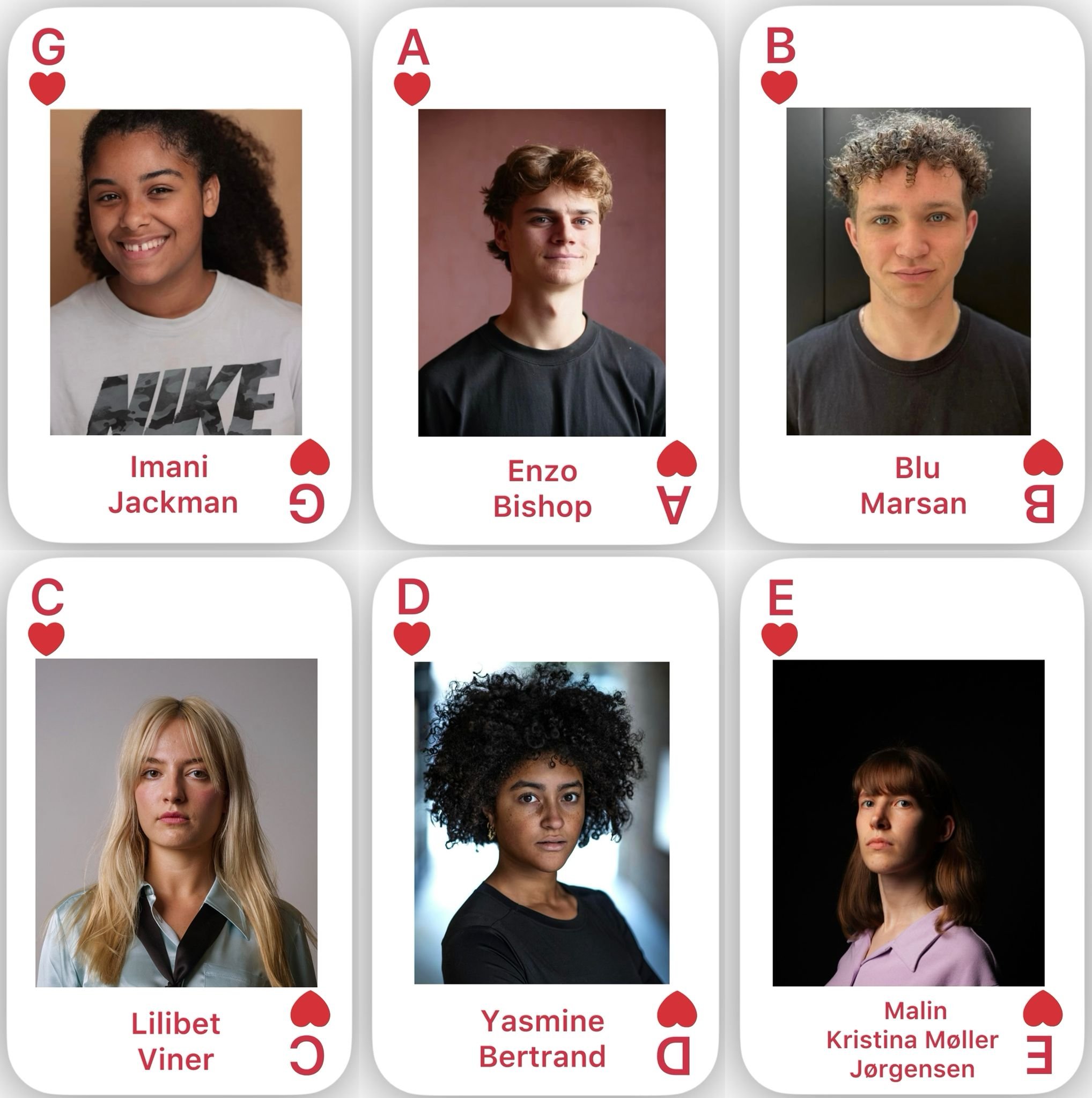
“Paitning the Roses Red Cast”
A broader question here, but always fun to ask, why should readers come see Painting the Roses Red?
Sazi smiles. “I would hope one of the reasons they should come is because of what you just said. I think - we’re not trying to reinvent the wheel - but we are approaching some classical theatre ideas with some new ways to approach them, that maybe some of these audience members haven’t seen, which I believe can make them think about things in a different way. And – I think we’ve all been really excited about bringing an international cast together and the richness of that, so those would be the two things I would call out as we’re experimenting and maybe showing some theatre and ways to do theatre that’s new to some audience members.”
“I also think as we go down the rabbit hole in the piece,” Guy fittingly remarks, “it does turn very absurd and it is lots of fun. There is lots of fun that happens later on in the piece.”
“Yeah, and I will add to that that I would like audience members to come not to be comforted in what they think of themselves, and what they think that they are already doing, but to be – to challenge themselves and to leave the theatre questioning if they are doing enough as an individual.”
Rowena contemplates before she continues. “To maybe be a bit sweaty in their seat and could maybe quite like to leave but, that’s to be the reason why, they must stay to the end.”
Guy circles back. “It links to our theatre name, so we sort of wanted to take those tinted glasses off a bit and see how that feels.”
“But also not with an approach of lecturing,” Rowena clarifies. “I think we wanted to make a piece that – we’re opening a door of conversation. We never say, ‘this is how you should think’ or, you know, we never act like gods or believe we’re above anyone in what we’re writing. It’s just purely – let’s have a difficult conversation. Let’s be open to that.”
Sazi also tells me, “I think, too, calling to the immigration process, it is not set in stone. It can be changed.”
“We can rewrite the way that we want of what is means to be ‘British,’ or feel like you belong where you are and maybe to empower the audience a little bit too. That they aren’t bystanders in the audience, in the show and in real life. They can choose to help make a difference and change the way that the system works.”
This links into my next question, with your statement -I say to Rowena - about opening up a door of conversation, what do you hope Painting the Roses Red would leave with audiences? What do you want your audience to feel when they leave the play?
A synchronised pause. The group have a unified moment of processing before Sazi is first to reply.
“I think the sign of a good piece is reflection and self-reflection on how they move through the world and specifically, right now, their country – what makes them feel like they have belonging, and have they done that for others, and maybe to notice things around them a little more. In an age of technology, it’s very easy to silo, to surround yourself with people who have the same experiences as you, who see the world in the same way, and to assume that everyone kind of feels that way and sees the world that way and hopefully this helps them ask more questions, and ask questions with friends and family, and discuss! Maybe not completely change their mind or make them drop everything and, you know, become a politician or something – but start to really get out of their siloed idea of ‘this is my experience; therefore, this is the experience that everyone else has.’”
Rowena once again politely checks with the room, “Can I add as well?”
Everyone ushers her to speak.
“I think I love people to leave, think, questioning ‘what does being British mean?’ - if they themselves British - what does being British mean to them? And what values are important? Is it a perfectly made cup of tea? Is there such a thing? Or is it understanding someone who they might not choose to understand? We explore so many kind of ‘British things,’ and croquet, and knowing the perfect way to say the Jabberwocky poem by Lewis Carrol. I think it’s just like, priorities. Our character of Grace, she fights to stay in the UK, to bring up her newly born child with her husband and to not be in the US. Where she fears for her child’s safety. I think – to question priorities and people’s own identity and their relationship to their identities.”
Guy smoothly goes on. “I think everyone will be able to connect to the piece because I feel like if we’ve all been in similar situations or seen similar situations, we can reflect on our reactions to our own lives.”
You’ve given such a detailed description of your work so far and it’s clear that you’ve poured a lot of passion and thought into it. Is there anything you are looking forward to yourselves, maybe, the Edinburgh fringe or beyond that? It doesn’t have to be theatre – it could be anything.
“We’ve always said – I think, Anasazi, you’ve been the best at reminding us, throughout the process,” Rowena acknowledges, “but every stage is just a stepping stone, and Edinburgh Fringe is not the last time that we want to do this piece. We would love to show it in London. We’d love to just show it, you know, anywhere, really. We’re not over at Fringe!”
“I also think we’ve sort of just come together as such, like, a wonderful team,” Guy gestures to the group.
It’s clear you guys have amazing chemistry!
Guy laughs, “yeah! Looking forward to - obviously, we are really focused on this project - but future projects and like, building our theatre company.”
“It’s really exciting,”Rowena voices.
“I want to call that out that out of - I’m not going to slander every company I’ve worked for, people I’ve worked for, I’ve worked with really lovely people - but I think a lot of times in this industry it can feel incredibly competitive. There’s a lot of ego because people have to be very vulnerable in this work, and I think that can stir up a lot of emotions. I think it’s very common in the theatre industry to have a lot of confrontations and like, challenges internally but this group has been an incredible breath of fresh air. I’m looking forward to continuing to grow this company, this piece and eventually move over to the other side of the ocean,” she laughsbefore carrying on steadily.
“It’s wonderful how positive and supportive the three of us have been with each other. We’ve done so much this first year: brand new company, our first show, we’re international and our cast is international. I think it’s okay for me to share that one of our original cast members couldn’t actually get to England because of immigration.”
The group exhale a frustrated laugh of irony at the statement.
“We’ve had a lot of bumps already, and navigating those with these two has felt so positive, and it’s reminded me that theatre can be that and should be that, and I think we try to instill in our cast, who also come in with such positivity, some of them very young in the industry, to have an experience surrounded by people where kindness and curiosity is at the forefront. ”
I double-check everyone has shared what they’ve wanted, asking Guy is there’s anything else he’s excited for.
He freezes briefly, trying to think, and running his hand through his hair in mock panic.
“I don’t know!”
“Guy, do you want to share what you just completed in your own personal life?” Sazi suggests.
“I mean – I’ve just done a bunch of exams!”
Ohhh, so you’re looking forward to freedom?
“I’m definitely looking forward to freedom,” He chuckles.
“I love it so much because – I think chemistry is certainly my passion. I love chemistry. But! Having this other world, like, another half of my life and them both crossing over more than I could ever thought – it’s wonderful.”
For out last question, a nice little one we like to end on, just to round it all up, what would be your piece of advice for another creative in this industry? It can be as big or as small as you like!
Guy sits up in his chair as he answers cheerfully, giving his advice on creating a caring environment where everyone can share and progress as a unit.
“I want to actually tag on what Sazi just said, because I think what’s more important than ever is how you work with each other and what everyone takes away from the piece. So as a cast member, or an audience member, or director, what you leave with is really important.So – creating an environment, I would say. Learning how to create an environment where everyone can take anything away that’s positive and feel like they’ve learned something – feel like they’ve been part of a community where they felt safe and joyful and felt able to be vulnerable and explore things.”
Rowena’s next, her advice focusing on overcoming fear when sharing your work and going beyond self-imposed limitations.
“Being vulnerable. Like I would say never let being scared of showing your work mean that you don’t share it at all. And it’s much easier said than done, but if you’re around people that make you feel safe and heard, you feel more inclined to share what you’ve been wanting to or working on. So just share! And if you think of yourself just as an actor, forget that, and create as well! Get involved in every other part of it, because the more you understand about it all, the more you can understand how much someone else is bringing into the group. Nothing’s just easy for anyone, everyone’s doing so many things.”
Finally, Sazi speaks about artists remaining true to themselves and not yielding to external pressure.
“I think my biggest piece of advice, especially where I am right now, would be that there’s no one way to be an artist and thus knowing what your boundaries are, I think is so important. I think a lot of artists fear that if they speak up, and they say their boundaries, it will lose them jobs, or they won’t be as successful. And that’s what’s great about this industry is [success] can be for a lifetime.” A brief pause. “The best way to give it longevity, in my opinion, is knowing where your line is, and it’s going to be different than the people around you and that’s absolutely okay! I would always just encourage artists to stick with their boundaries, voice those, and not let pressure from the outside make them think that their boundaries need to change in order to stay in the industry.”
There’s definitely something about theatre. That essence of just always needing to give constantly, trying to hit a bar and to surpass it. As you said, it’s a very competitive industry.
Lastly – is there anything else you guys would like to say that we may have missed out during the interview?
Sazi says, “I’d love to call out we’re sold out for our show in a week! We already know lots of people who we wish we could give ticket to, but we would be so thrilled if people joined us up in Scotland and took a holiday in August. Also, we hope that’s not the last time we’re putting this show on stage either!”
You can find tickets to ‘Painting the Roses Red’ in Edinburgh here, and the link to their social media page can be found below!
Kalopsia Theatre Instagram: https://www.instagram.com/kalopsiatheatre/
Edinburgh Fringe Tickets: https://www.edfringe.com/tickets/whats-on/painting-the-roses-red
A huge thank you to Rowena, Guy and Sazi for joining me and for the wonderful discussion we had. I wish them the best in Edinburgh!
By Ishbel Ewing
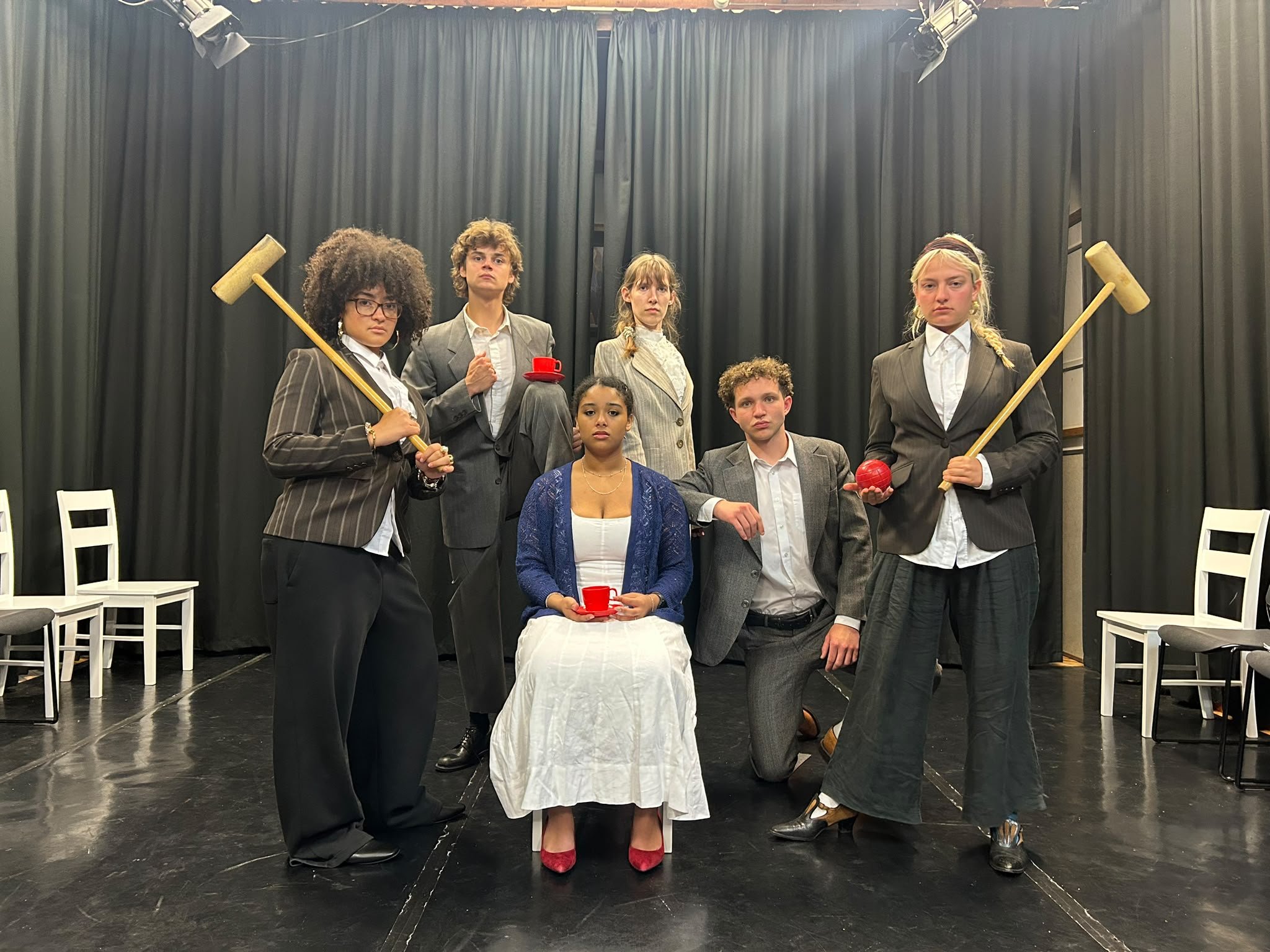
“Painting the Roses Red”