Revu The Harrowing of Hell.26
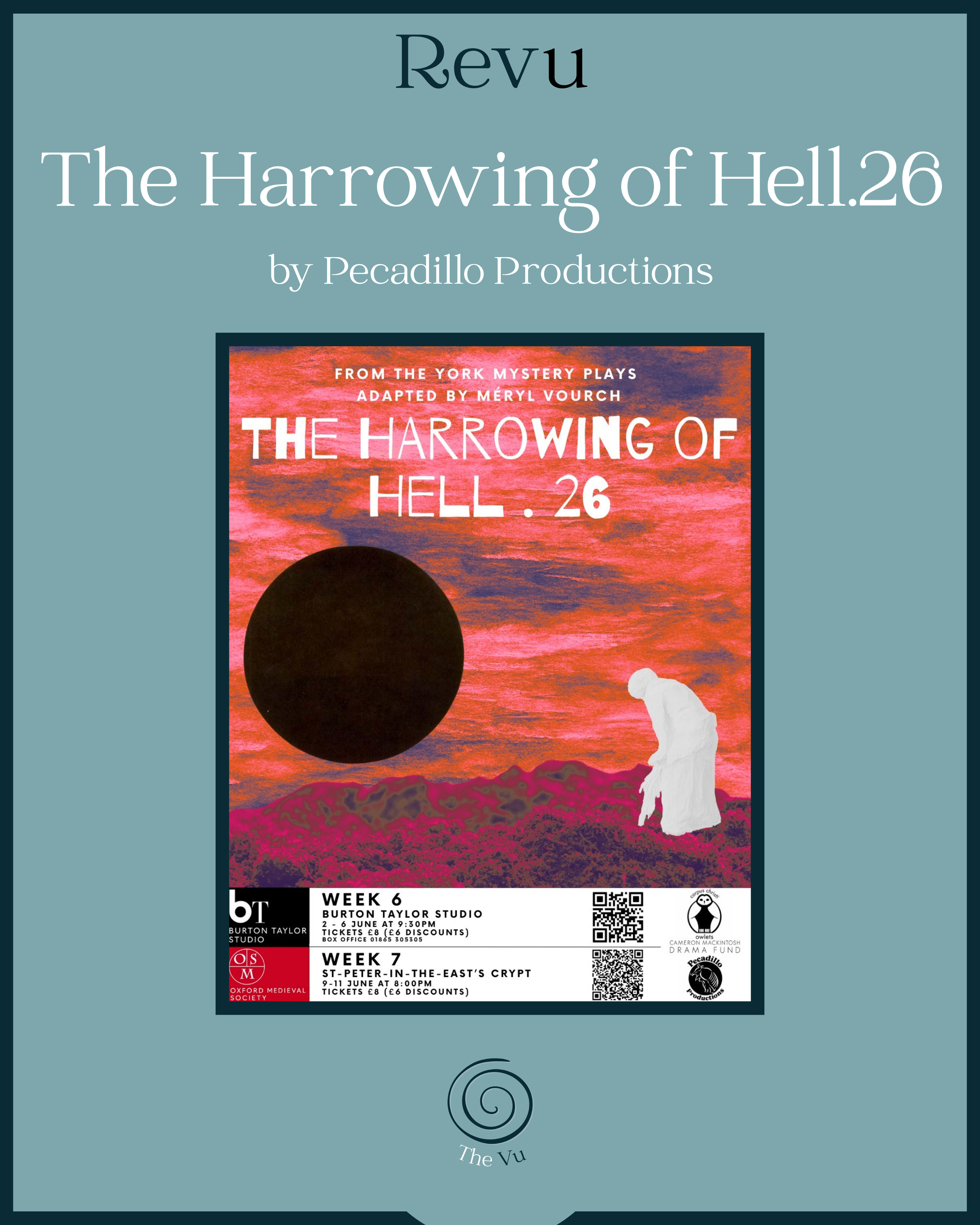
“The Harrowing of Hell” Poster
The Harrowing of Hell is one of the earliest dramatic works from Britain and has been adapted countless times throughout its long history. Christianity claims the fall of Adam and Eve placed all humanity in the power of the devil until Christ sacrificed himself on the cross. The Harrowing of Hell’s story originates from questioning the fate of the souls that lived and died prior to Christ’s incarnation. This question then led to the legend that Christ went to hell to overthrow the devil and lead the souls trapped with him to eternal life.
Originally, this play is extremely short. It follows a clear design beginning with Satan claiming power of the dead and asserting his rule over hell. Demons join him in his arrogance and tyrannical rule. Christ soon enters and confronts Satan, challenging the demons and eventually is victorious over Satan and hell. Everything escalates quickly and Christ and Satan are very obviously foils to each other, one the embodiment of good and peace, the other of suffering and evil.
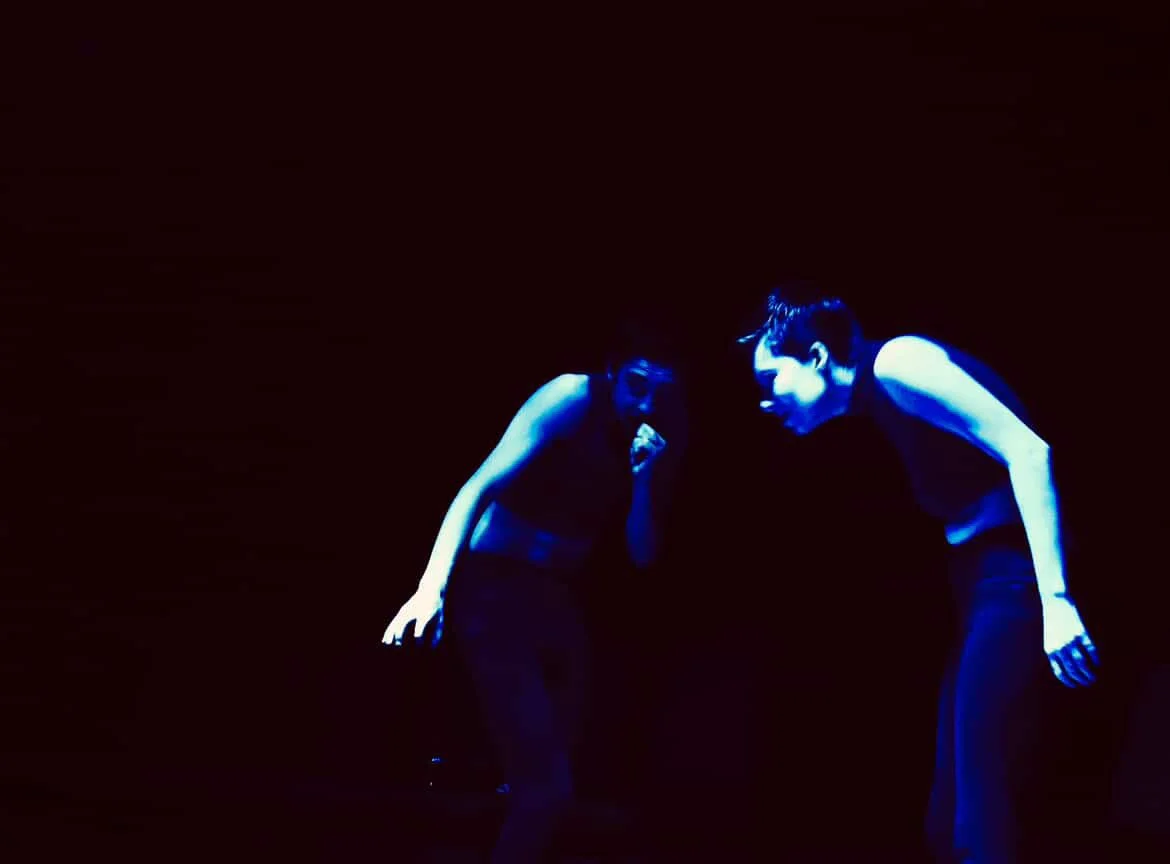
“The Harrowing of Hell.26”
Pecadillo Productions joined the many before them in adapting this iconic narrative. Upon entering the Burton Taylor theatre, the staging was immediately intriguing. The staging area was straddled by rows of chairs in a stadium style set up. I could tell from before the show began that one of Méryl Vourch’s main aims was immersion. This was further confirmed when four of the cast entered the space and sat amongst the audience.
Despite this, these components were perhaps the most immersive parts of the production. The adaptation of the script seemed somewhat Shakespearean and somewhat Miltonic. I found this odd considering the description promoted ‘contemporary experimental theatre’ and ‘fractured language’. Instead, the language felt repetitive and confusing.
The script felt particularly stagnant during the narrator’s monologues. Often time, it seemed to be filling space rather than moving the narrative forward. Thomas Arensen as ‘Satan’ gave an emotive performance and there was an excellent physicality to his delivery. He created a sympathetic ‘Satan’ and I only wish this was further developed by the production. My understanding of the narrator’s performance was that the director may have missed an opportunity here too. The narrator’s lines were placid however combining that with the script itself led to a performance, through no fault of the actor, that was disengaging. Ian Machalek who played ‘Christ’ was similarly engaging, however once again I found his performance hindered by repetitive monologues.
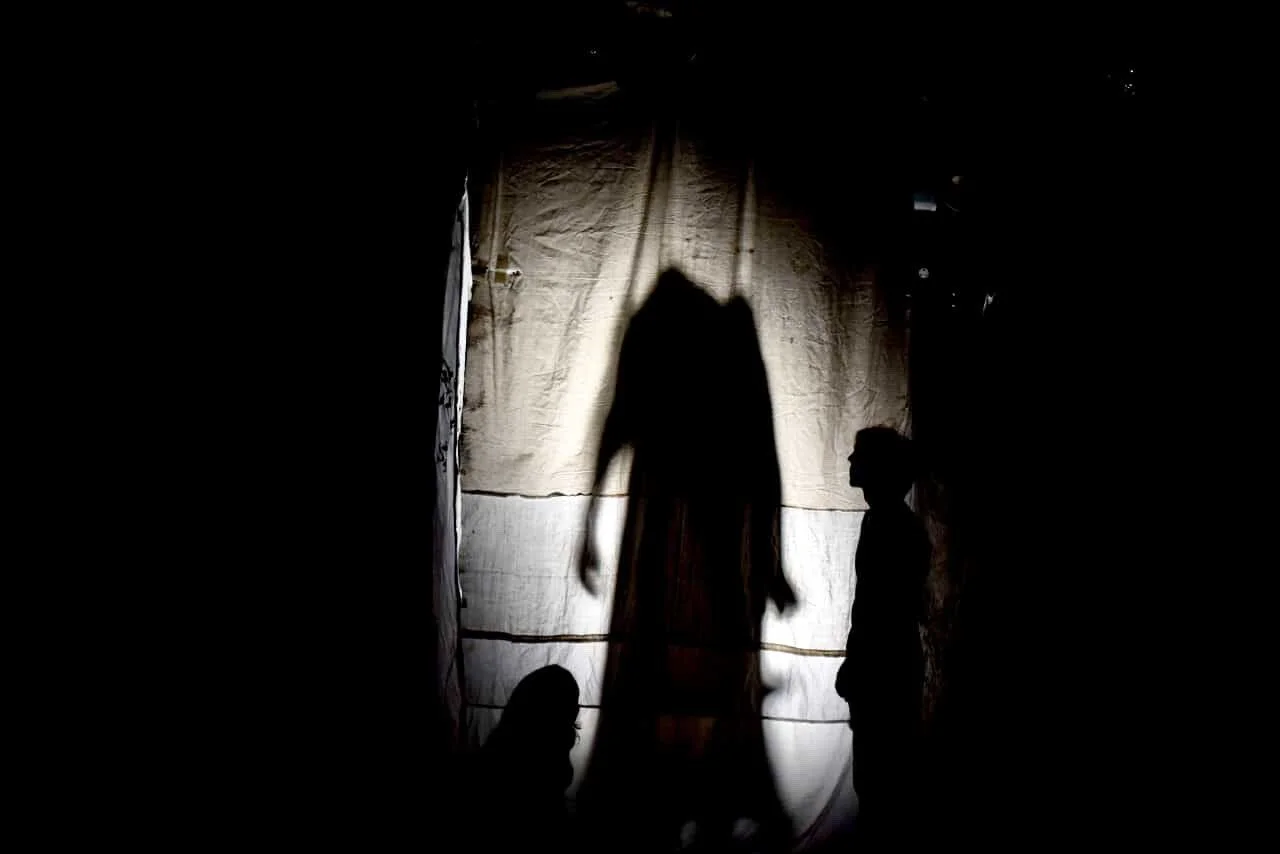
“The Harrowing of Hell.26”
Whilst I appreciated Machalek’s performance objectively, it did make me question the choices of the director. I found the spiralling and almost manic portrayal to be confusing. There was also an element of arrogance and flirtation that left me wondering if I had correctly distinguished between Christ and Satan. The description claims that ‘Christ arrives not as a merciful redeemer, but as a violent intrusion [...] to reclaim what is rightfully his’.[1] This could have been an experimental aim however it was ambiguously executed which was almost misleading. Considering the strict original binary of the story, this could have been something fun to play with. I would have enjoyed feeling empathy for Satan or feeling disturbed by the figure of Christ. However, the characterisation did not provide enough depth to allow this.
I did wonder at points if this adaptation might be aiming to be some form of religious inversion or critique. If that was the vision, then this should have been constructed much more clearly and much more carefully. If this was not, then the direction was in need of some reconsideration. I understand that Pecadillo describe the souls as no longer knowing ‘how to imagine life outside of the systems that have shaped them’ but again I think the execution of this fell short. The script did not accommodate this complex portrayal and sadly I think left its audience with gaps to fill on their own.
Sound was excellently executed, even making me jump a few times throughout, however I found the lighting jarring at some points, particularly (what I felt to be) the unnecessary use of strobe lights. Costume was also a difficult element for me to grasp. Satan was dressed in white trousers and a white top, and the narrator was dressed completely in red. I thought at some point this may lead to something more intentional, but it did not. I felt once again that there was an experimental element at play that did not really know it’s purpose.
This production benefitted from an enthusiastic cast that threw themselves into the performance and that was not overlooked. I admire Pecadillo Productions for their vision; I only wish its execution reflected the subversion that it seemed to have in theory.

1.5/5 Stars

“Completely Bloody Incoherent”
Review by Emma McKeown