Intervu Rachael Fay
Rachael Fay
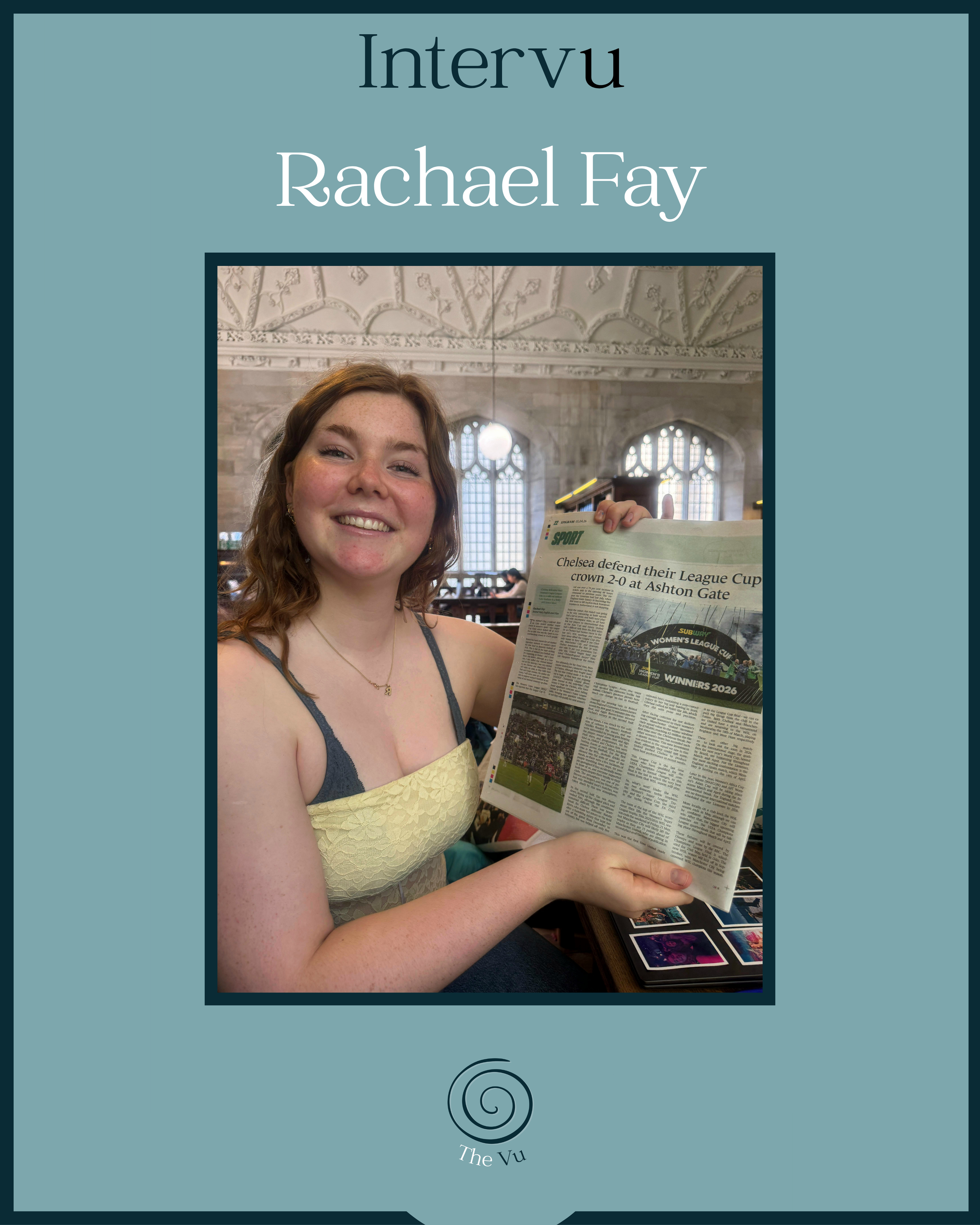
I sit down with Rachael Fay, a 2nd year English and film student and sports writer at the University of Bristol to talk to them about their work and just what got them writing in the first place.
“I am very jealous of the young girls now who are in school and will have so many more opportunities because their governing bodies and teachers have seen women achieve at the highest level and have made changes within the curriculum and just culturally as well that it is not only acceptable for women to play sports but also encouraged”
I ask straight away what Rachael does?
“I’ve always been a writer, since I was really really young.” She tells me, “and last summer, when the Lionesses won the Euros, I started writing as a sports journalist. I had never interacted with football or sport really - didn’t really like it at school.”
She goes on, “but I don’t know…watching women achieve on the international stage at the top top level while also still being girls and I could really identify with them…I don’t know…I’ve said this in like job interviews as well and it sounds like I’m exaggerating but I promise I’m not: it’s like something chemical happened! I suddenly had this passion out of nowhere and I started writing for Bristol’s student paper Epigram and I’ve been doing that for the past year and that’s been amazing and its given my writing direction for the first time and I was longlisted by the FWA for student female football writer of the year.”
She lights up, “It was a crazy moment where I realised all the stuff that I had been doing was real and that people actually read it!”
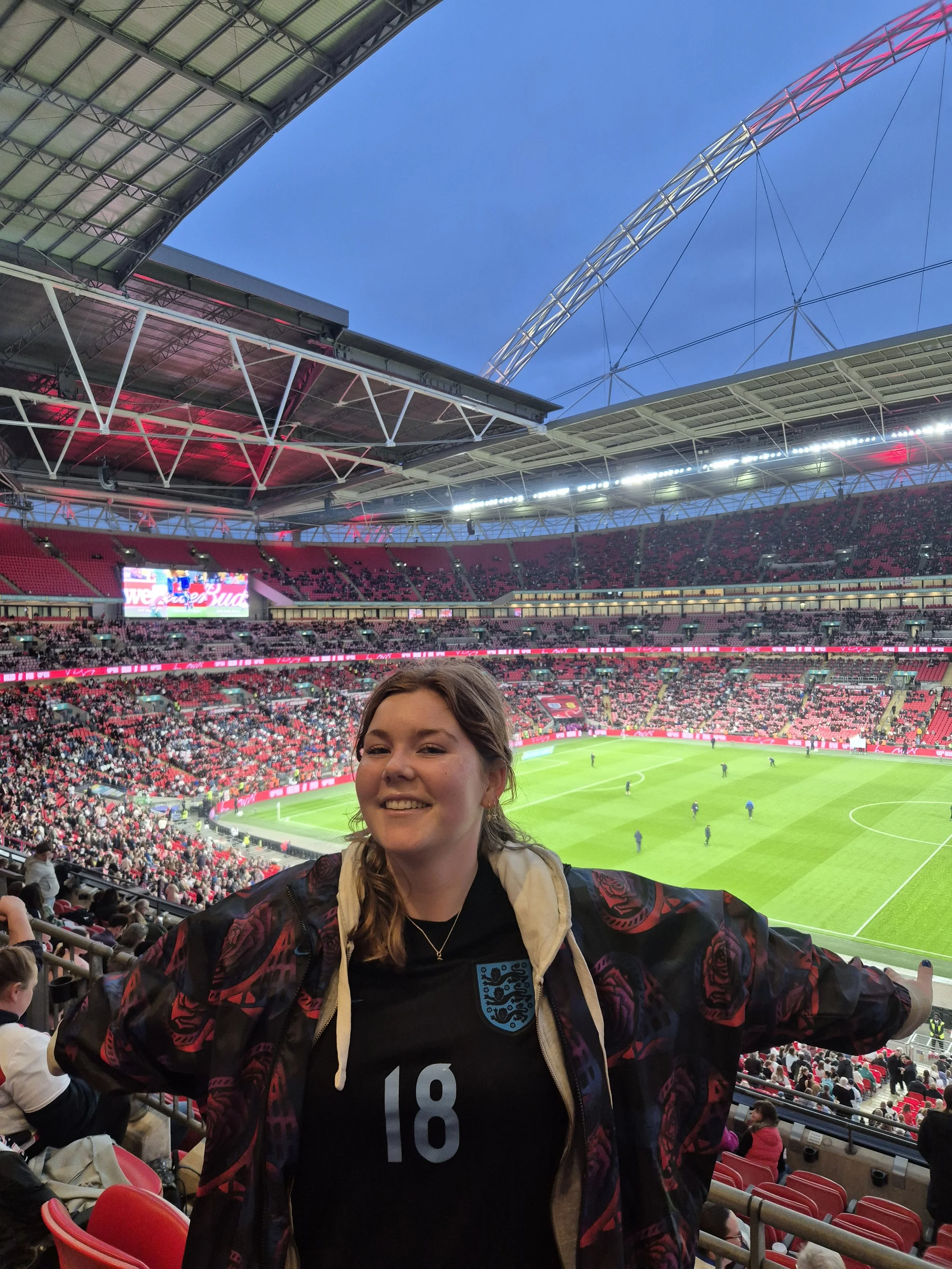
I should point out that throughout this whole interview, she is wearing a football top.
Rachael Fay
I ask her about this experience in the summer that suddenly spurred her interest in women’s sports?
“We were on holiday at the time and we watched all of the rounds anyway - nailbiting experience. I think it was kind of gradual but…I don’t know and it kind of scares me a little bit that I don’t know and it was so on chance.”
“But we were watching the final and then my dad said we’ve got to go for dinner now and I was like no! It was the last ten minutes, we’re drawing and we’re going to go to penalties. So we were walking down the street and listening to it on the radio. And then as the penalties were coming through we walked into the restaurant as Chloe Kelly stepped up to take the final penalty that would decided whether we’d won or lost basically.”
“And it was that communal experience of walking down the highstreet - and I’ve used this as a line in at least two articles - walking down the street and seeing women's sport on every screen in sight and seeing everyone watching and walking into the restaurant with complete silence and everyone watching Chloe Kelly smash it into the back of the net and the celebration that followed was amazing and I just remember sitting there in shock. Obviously it was the magnitude of the event of the Lionesses going back to back and making history but it was also observing everybody else seeing it as this incredible thing and really important thing.”
“Then it was a few days later when I was still full of the adrenaline and still full of the excitement and I didn't know what to do with this and my mum and dad were like we don’t know either and I just thought well…my best work comes from when I’m so full of emotion that I need to write it down and that’s what happened with the Lionesses, I just decided to write an article.”
I ask her if she was ever worried about her passion fading?
She jumps in, “I’ve thought about it and I think around September, October, then when the Lionesses campaign ended I picked up for writing for the Red Roses who had a home world cup campaign and were also playing in Bristol against France so I went go and see them and I started writing. And it did occur to me that this was such a huge thing that I’m a part of but also that it came out of nowhere and I did worry for a time that my passion for it would disappear. She smiles. “But I’m coming to the conclusion that it hasn’t gone anywhere and I’m just as passionate as I was a year ago and its been such an amazing year and I’ve made so much progress in that year in like finding direction and making connections with people that I don’t see it going anywhere. I think I’ve found what I want to do, which is hard to say because the sports industry’s huge but I’ve narrowed it down more.”
I ask her about women’s sports and the way its viewed in society?
“One of the reasons I thought coming to invtervu would be great is because I don’t think it can be underestimated how big women’s teams can change people and change perceptions. I mean it happened to me so I will never stop talking and never stop promoting them!
“I just wanted to make it clear how important representation is and having the media attention and coverage and excitement and cultural phenomenon when a whole country can unite over one thing and I feel like that's what’s so needed now because I feel like society is becoming more fractured and really struggling. That communal experience is so important.”
“I am very jealous of the young girls now who are in school and will have so many more opportunities because their governing bodies and teachers have seen women achieve at the highest level and have made changes within the curriculum and just culturally as well that it is not only acceptable for women to play sports but also encouraged because we’ve seen how needed the change is and how important it is that we see that women can and do do incredible things in every avenue but now into the sports industry as well and as a team as well.”
“I felt really ashamed when I first started writing because I had no idea. I had no idea at all, women have been fighting to wear the England badge for decades. In 1922 the FA banned it and they banned women from playing football because people supported it and they didn’t want it. I just feel like now I'm writing a wrong.” She tells me impassionedly.
Rachael Fay
I ask Rachael about her other projects?
“I also have a film podcast called DVD Diaries which is very small, with me and my best friend which we don’t do as much as we’d like to because uni does get in the way. I also have a little youtube channel that I have for just over a year but yeah, predominantly interested in filmmaking and women in sport and finding art in the sports industry.”
I ask her about the process behind her work?
“I think they’re similar in the way that both podcasting and writing for the sports industry has been…”democratised”...if that’s the right word?
“I think that with digital media and social media has really made both of things really accessible and are similar in that women's sport and DVD Diaries you’re never short of anything to say ever. I always struggle with every article I ever write, I always write way too much!”
“But process wise I’ve always just bounced off of other people and surrounded myself with people’s opinions that I value and that’s why uni is so cool because you’re always surrounded by hugely talented people. I forget that my best friends are also these insane artists, they’ll delve through their sketch books to make a note of something and there will be this insane portrait that they did casually or my best friend has just made a little documentary and its incredible. So getting them to read my work and discuss plans for the podcast with them is always been what I do and is always what I do in my process.”
I ask her if her recent sports journalism work is similar to what she used to do?
“There’s a similarity in that I’ve always just tried to write things. When I first started writing as a sports journalist it was the first time I wasn’t making something up. I’ve written fiction always, its always been a little escape and I had always sworn off journalism because I thought there was a lack of creativity there. But writing for the last year has really shown me that that’s just not the case at all and so much creativity can be found in telling people’s stories that are true and then it carries more weight as well because these are real people and there’s no need to make anything up because their lives are incredible.”
“My writing is different now in that it has direction and it feels like I am writing for a really good reason. Before I was writing for myself but now it feels like I’m part of something bigger than myself and pushing for change in the sports industry. There can always be more of that! I’ve completely changed as a person since becoming a sports journalist like I’d never been to a football match at all and now me and my dad go to Arsenal women’s matches together and introducing my family to women playing football and women playing rugby has also been incredible because honestly: we didn’t - for the longest time. And if we had? Then maybe I would have discovered this sooner. It’s similar in that it's still very very creative.”
I ask her why people should read her work?
“I am very honest in my work. I think art just generally has a way of forcing you to face the music, or face fears you have or things that have happened. And I think that writing, whatever the capacity is, whether it's in a fictional sense or as a journalist, I think that rawness of emotion really connects people together and that's why artforms are so amazing like with cinema and theatre and going to a concert or even online supporting people.
“I think it's the honesty and rawness that brings people together and I think that’s why the sports industry is so beautiful because you are watching and supporting real people go through real life problems and they still are able to achieve these incredible things and I get to be a part of that by writing about it.”
I ask her if there is anything she is excited for?
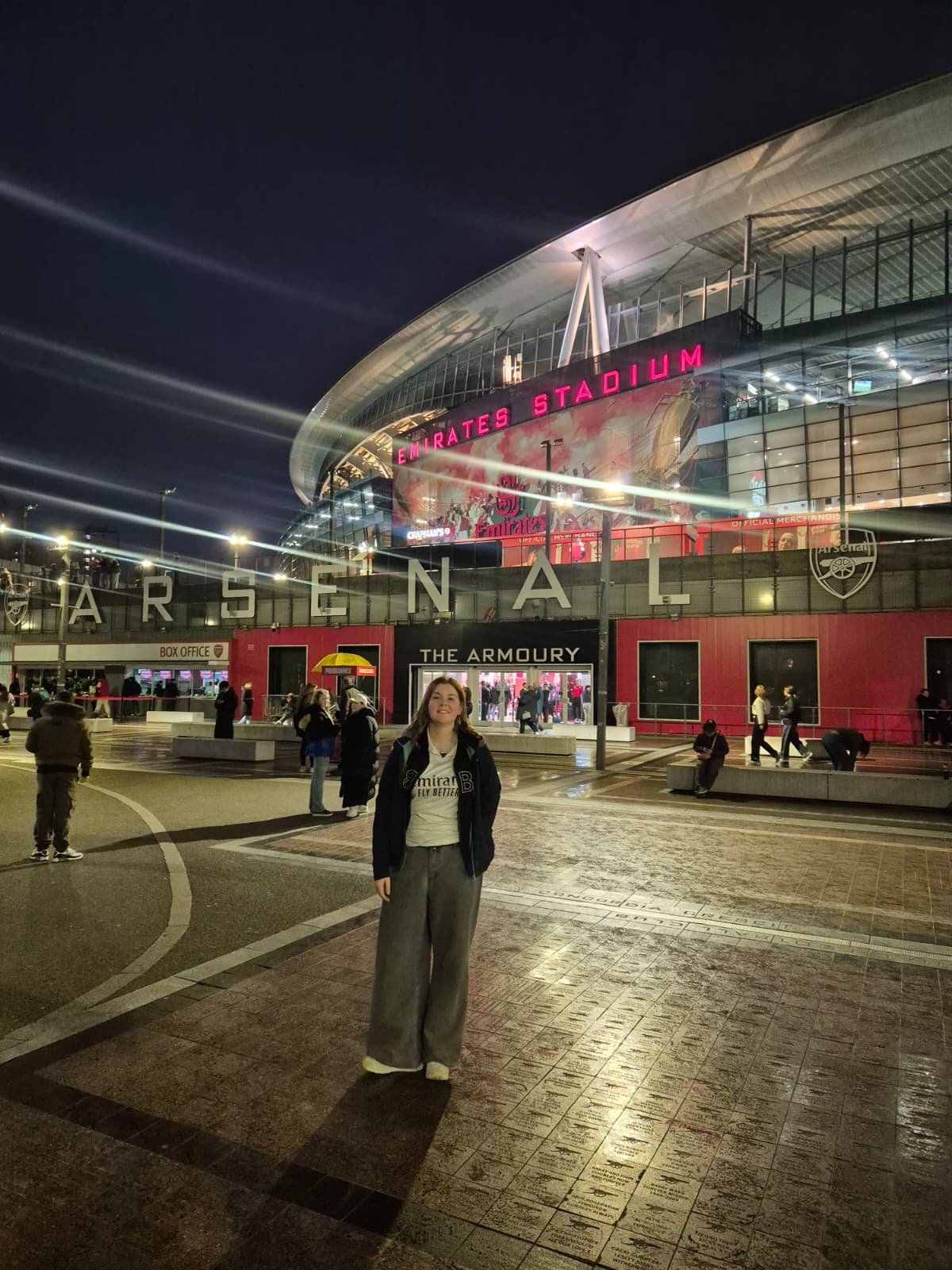
“I am going in July to go and see - I love theatre, it's not got much to do with my professional sense, I quite like having it as a thing I do for fun and not something I focus on - I’m going to see “Jesus Christ: Superstar” on the Westend. And that will have Sam Ryder as Jesus Chrsit which will be amazing. That’s something that’s really important to my family, going to the theatre is something they love. I don’t have any more football matches or anything which is sad but I went to the champions league quarter final arsenal women at the emirates - which is my first time going to the emirates which was amazing and I got to take my dad, who was a little bit flabbergasted because I like football now.”
I ask her if she has any advice for any other writers?
“I think this is going to sound a bit contradictory, I think that talking whether that be online or in person to everybody is so important. Develop relationships with people in a similar position to you and build those relationships but also build a relationship with what you’re doing? Like what your artform is. I feel like I’m in the position I am now because I’ve been writing for myself and now I’m choosing to share that with people.”
“Develop your voice, hone your craft and loving what you do for yourself is really important before putting it out there and I think we’re in a really good position now where it is easy to put yourself out there.”
Hell yeah.
“Hell yeah”
I ask her what’s next?
“Well I just finished uni for the summer and these are my last few days in Bristol but I’ve started working as an intern for this company called The Sports Creative Network who are really cool, the people running it are amazing and they match up freelance creatives with job opportunities and other people in their community. So I’m doing social media and community pieces with them and I haven’t been able to get as stuck in as I want to due to uni, but now I have the time to work on a video series for them. So that’s what I’ll be doing for the summer.”
“But hopefully writing more articles. I really want to do another one of the Red Roses, the England women’s rugby team. I published one last week but I really want to do another focusing on their cultural affect as well as their personal success. Those are the things on my radar but we’ll see what else comes up this summer - hopefully something cool.”
Rachael’s author profile at Epigram is: https://epigram.org.uk/author/rachaelfayy/
Rachael’s Instagram: https://www.instagram.com/rachaelfayy/
Rachael’s Youtube: YouTube channel
Rachael’s podcast: DVD Diaries
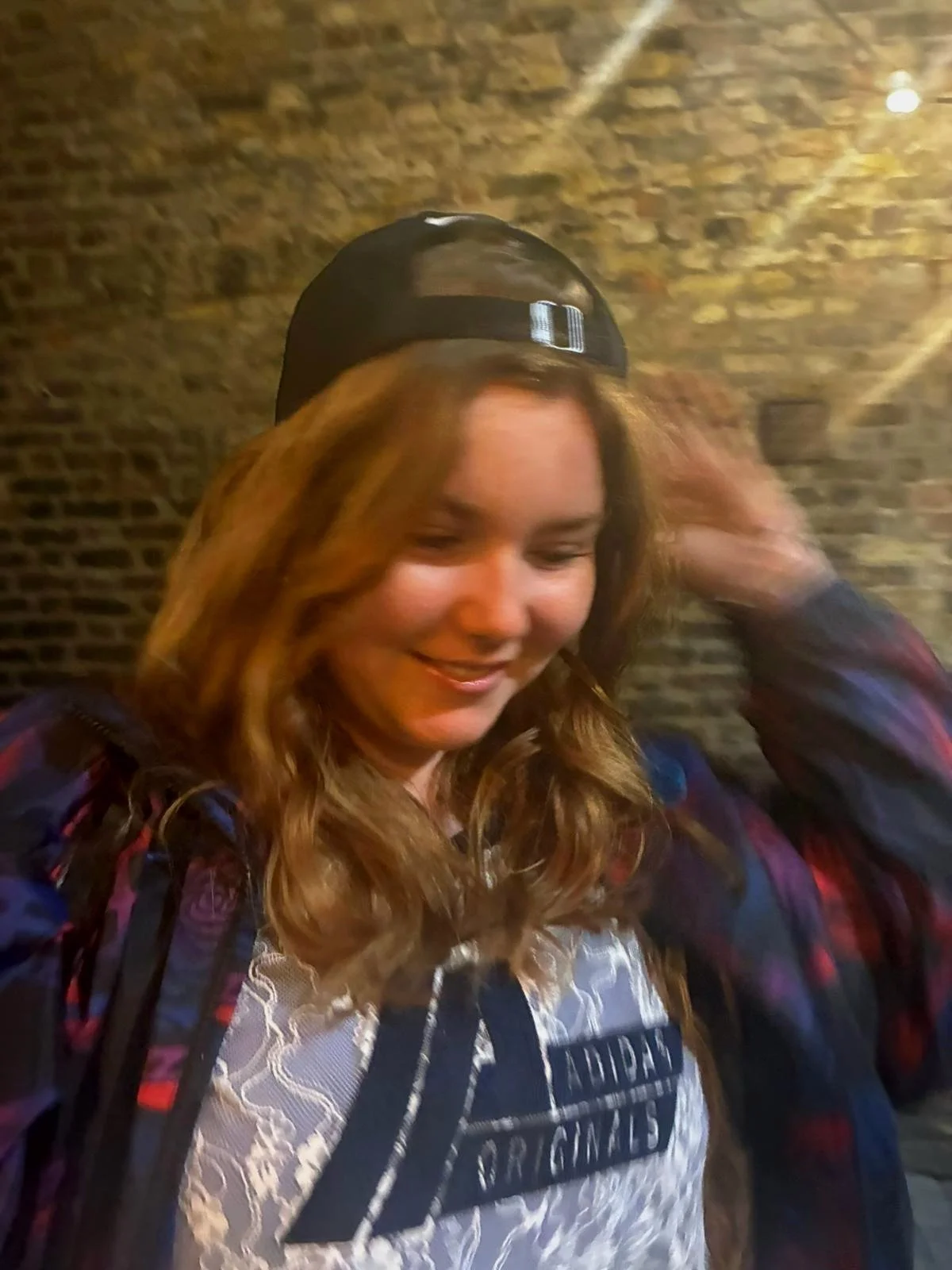
Rachael Fay