
“Brew Hill” Poster
Brew Hill by Pecadillo Productions is an imaginative piece with strong performances, dark humour, and wild contrasts. Set in a grad flat, best mates Gordon (Jem Hunter) and Nat (Trixie Smith) are treading water. Gordon is obsessed with the idea of going to Berlin, but can’t bring himself to book the flights. Nat seems comparatively capable, but is soon enthralled by the painter Pieter Bruegel, whose works came to her in a dream. With artistic allegories, techno music, and several appearances of the painter himself, certain scenes are highly successful. However, others feel underdeveloped or repetitive. This leaves us with a memorable play that has the potential to become a real classic.
“Brew Hill”
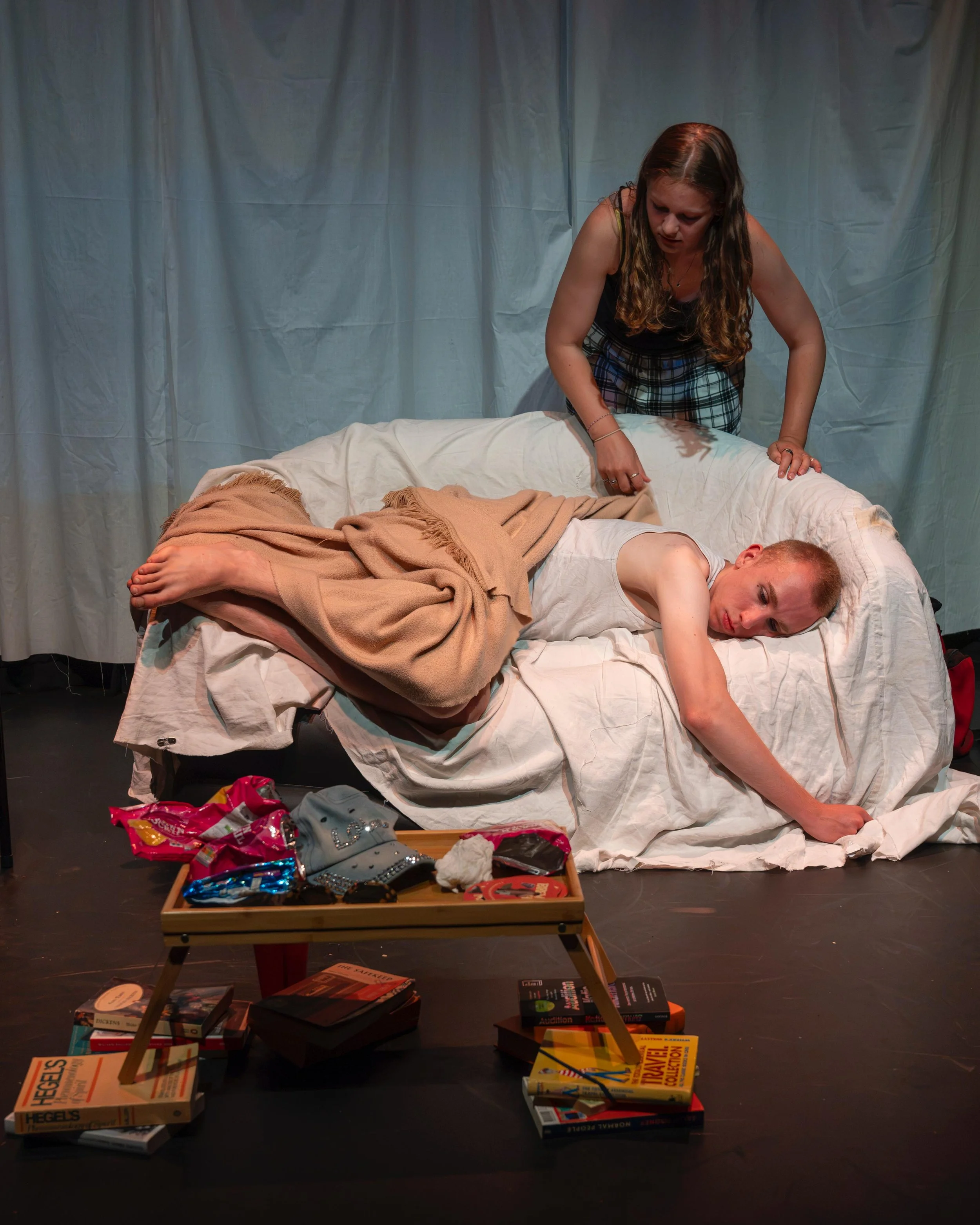
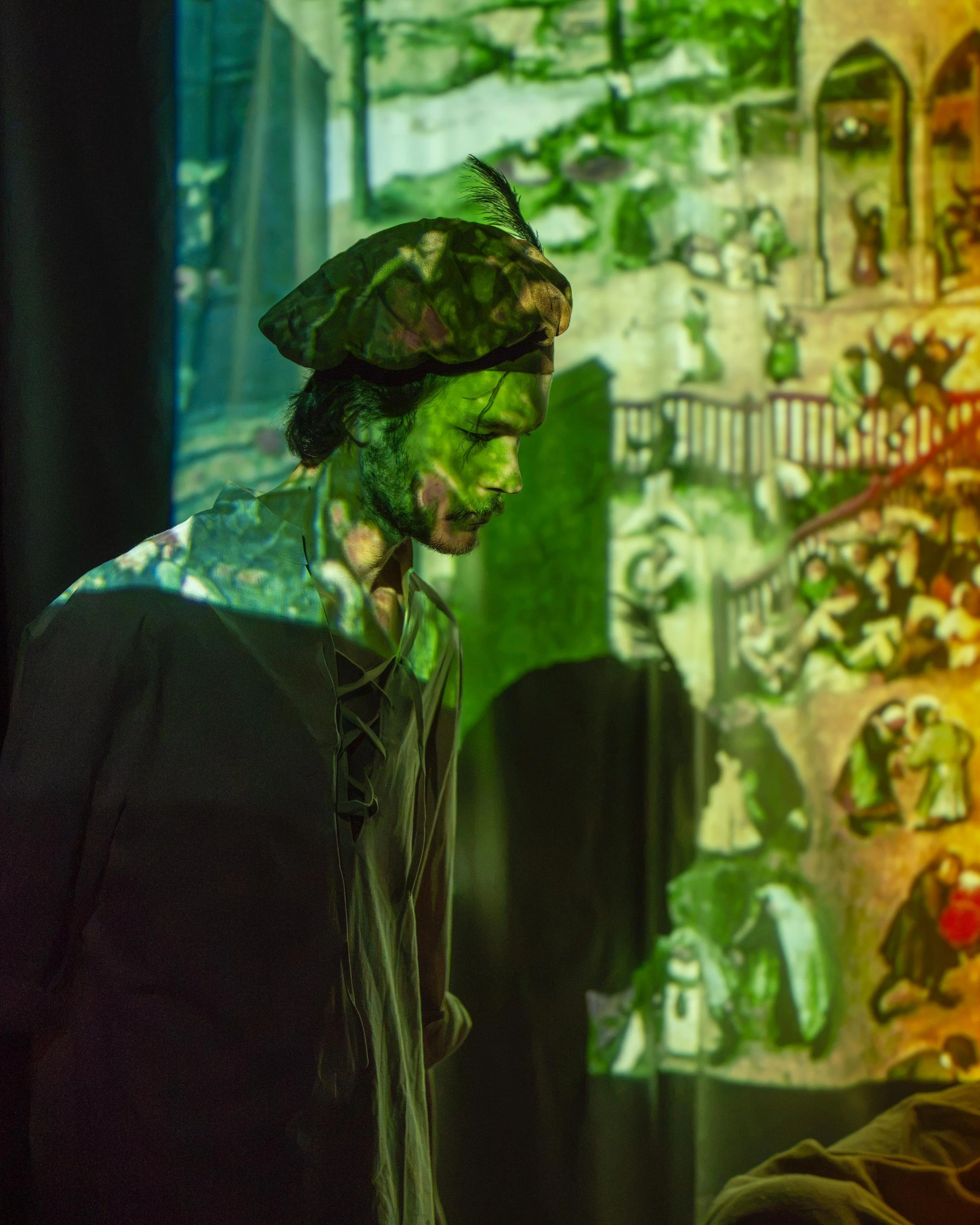
The play’s opening is utterly gripping. Through a slow sequence of projections and a lulling poem on voiceover, the audience is drawn into a Utopia of dancing, drinking people in earthen clothes - characteristic of Pieter Bruegel the Elder. Once Nat’s dream is complete, we continue to float in her lazy reality, as yet without details of time, place or names. Nat and Gordon’s flat is about 60% cardboard boxes, with paper cups and rubbish strewn around, reflecting their desire for their situation to be temporary. Gordon is a near-permanent fixture of the squashy red sofa in the middle of the room. The set and technical elements of the production effectively relay the flatmates’ delusions, as well as their lack of effort. Scene transitions are often accompanied by bouts of techno, the first of which is rather forced, though subsequent transitions work well. Costumes are naturalistic and effectively portray character and time period.
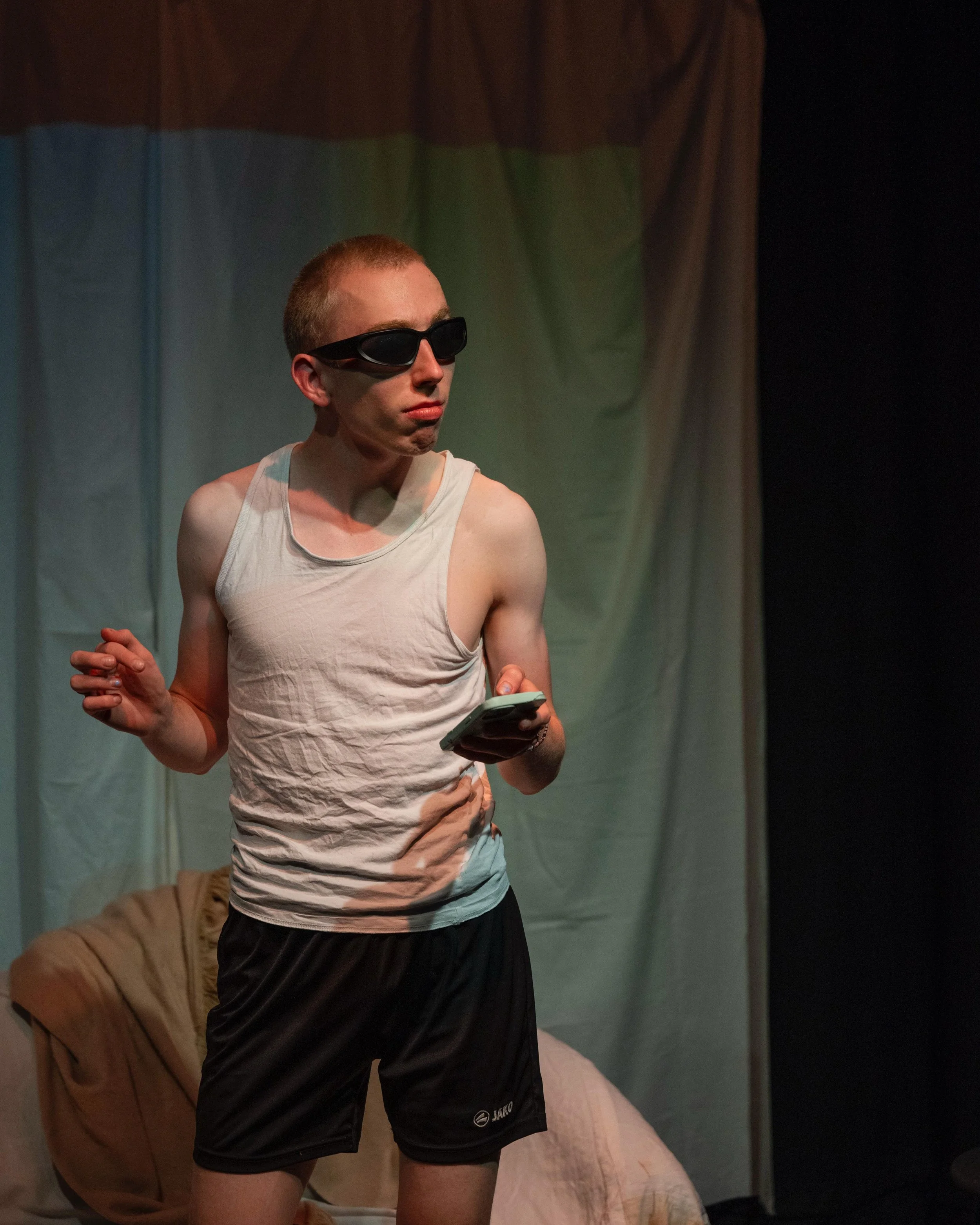
Performances from Hunter and Smith are engaging, with Hunter remaining dry and resigned while Smith builds to a convincing emotional crescendo. The pair’s codependency is certainly signposted within the script, but somewhat lacks the undertones of reassurance and anxiety before the final few scenes. Meanwhile, support from enthusiastic Kirsty (Hannah Wiseman), allows the flatmates to share knowing glances. Wiseman gives a strong character performance - her lighthearted, silly demeanour injects much needed energy into the piece. This works well in contrast with Pieter Bruegel’s sincere ‘facts of life’ soliloquies. Hugh Linklater, who plays both Pieter Bruegel the Elder and a modern day painter called Peter, is especially powerful in the former role.
“Brew Hill”
The play is conceptually ambitious, creating a few moments of brilliance. However, as a whole, it is curtailed by a few loose ties in the script, as well as character arcs that do not yet reach their full potential. Firstly, from waking, Nat refers to Pieter Bruegel’s work as "Medieval" and his brown scenes as “colourful”. Characters are not required to be factually correct, but this feels beyond deniability as her obsession grows - clutching a book on his work and printing favourites at the library to pin up at home.
The script also has a tendency to reel off sentences of long words (usually to comic effect). It feels incompatible to watch Nat describe the “quintessence” of a painter whose period she cannot name. Moreover, the audience is unaware of the actual location or life-stage of the flatmates - this requires stronger indication. Lastly, despite a robust opening and ending, the central pair appear to have the same conversation repeatedly in the middle of the play, which reduces their opportunity for development. Their character traits appear more as two-dimensional quirks than a part of a full personhood. Further attention to both of these would improve the piece significantly.

3/5 Stars
By Ella Kennedy
“Brew Hill”