Intervu Rebecca Harper
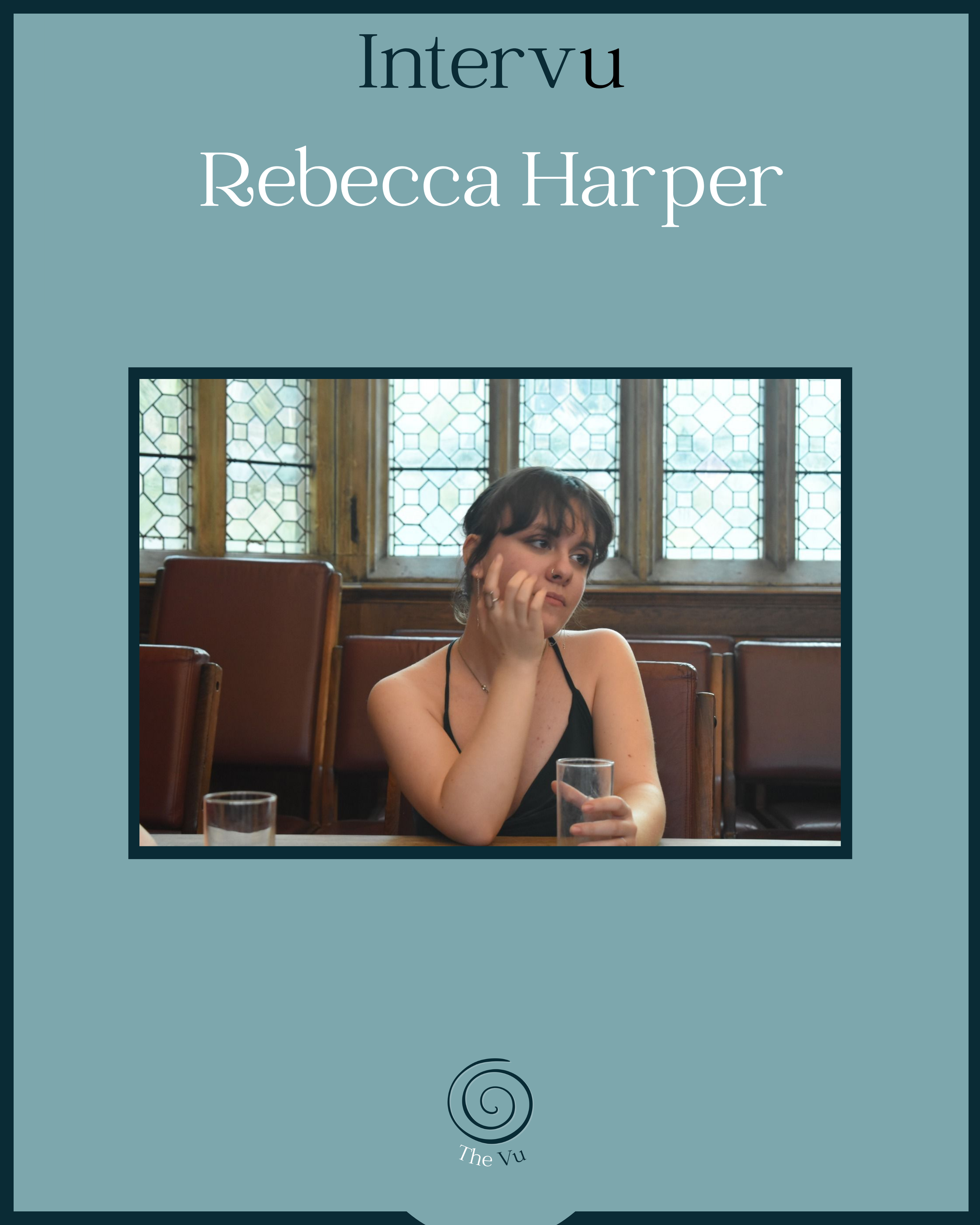
Rafi O’Neill
On a sunny Thursday morning nestled next to a window in the Independent Café, I sit down with Rebecca Harper, writer/director of Greyjoy, to talk about the play’s upcoming run at the Camden Fringe Festival, her and Tom Onslow's Blackstar Productions, and all things theatre. We end up chatting for nearly two and half hours, but somewhere in the middle of that time is an hour-long interview, which you can read (in cut down form) below.
This being my first go at conducting an interview, I’ve tried to set myself some ground rules: questions/comments from me are in bold, and Harper’s responses are italicized. It can be difficult to translate things like jokes, irony, and the natural exchanges of a fast-paced conversation into writing, but I've tried to preserve the most interesting parts of our chat, which was in reality a little more casual. The interview begins with mostly scripted questions focusing on Greyjoy, and its latter half contains more general discussion about the theatre world.
To get us started, can you tell our readers about who you are: who is Rebecca Harper as a theatre practitioner and why should we be interested in you?
Yeah! I'm Rebecca, hello, and I’m very new to theatre, I’ve only really been doing it since I came to Oxford. I used to be a dancer, and now I'm here and I do a lot of experimental theatre. I always read and watched a lot of plays but I never got involved with it, so since I’ve come to Oxford I've done a lot, as George can attest to. I've acted, I've produced, directed a couple times – I dabble. I do a lot of like weird stuff and experimental stuff, which sounds really wanky…
But I know what you mean, you do the drag stuff and such.
Yeah exactly, I do drag, clowning, dance - I do all sorts. Oh god, I really do do a lot don’t I…
Well that’s what you’ve gotta do nowadays, you have to be a hyphenated creative. Everyone talented nowadays is a writer-actor-director-whatever, like Rio [Rose Joubert] or Sali [Adams] etc.
Well there you go, I’m pleased to be within that group.
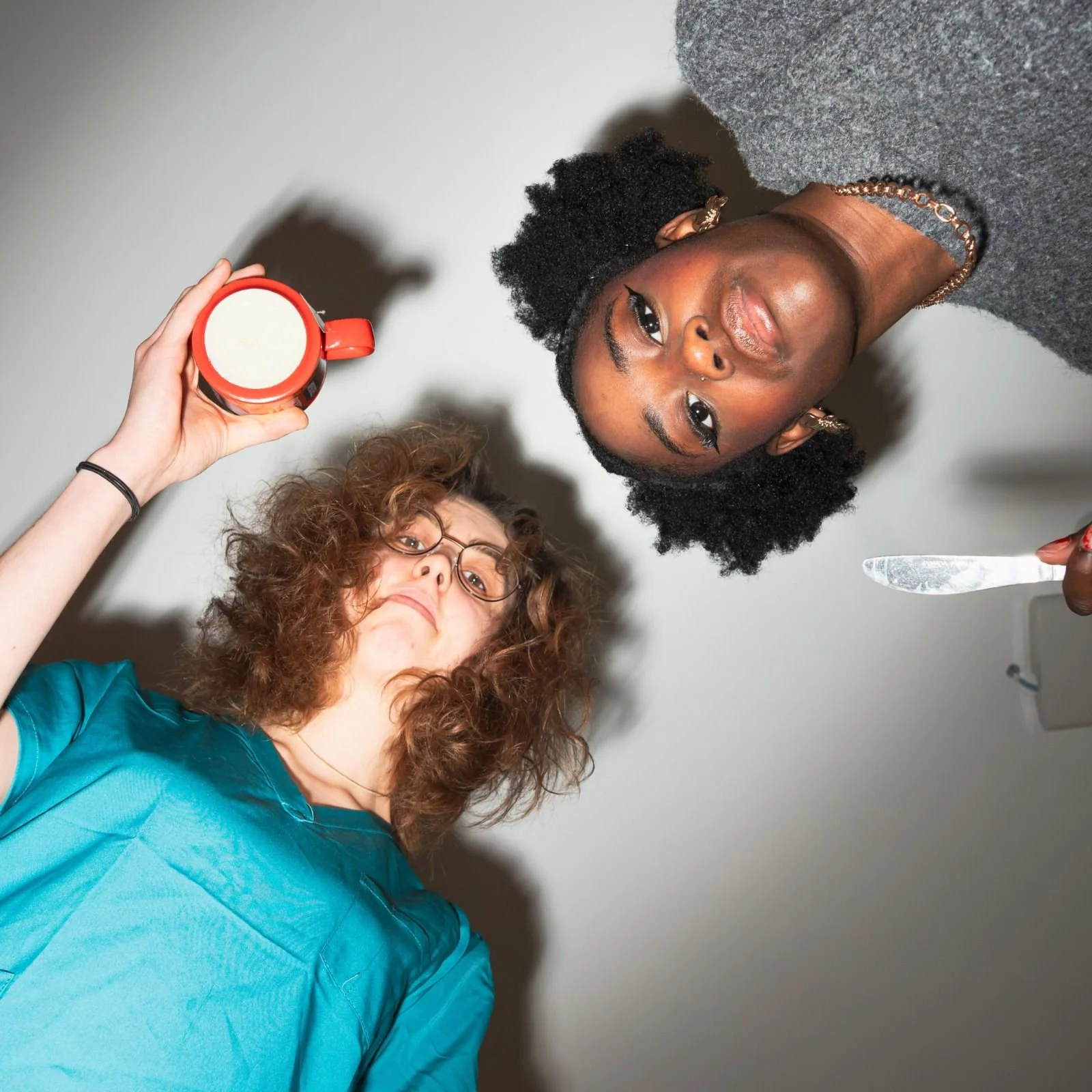
“Greyjoy”
Let’s talk about Greyjoy. Can you tell us about the play and specifically about the overarching story to start with?
So Greyjoy follows an out of work actor named Cait, and she essentially volunteers at a hospital to be a mock patient (which is a real thing that happens and I did!). She volunteers and is in the hospital with an F2 junior doctor called Mina, and Cait is met with people coming in and out of the room saying, “hey, your dad's dead,” and then leaving – which is a weird experience for anyone but also very weird for Cait because she is actively going through emotions of grief. But plot twist: all of the doctors are people who've never read the script, as George can tell you… [I was one of 20 cold-readers during the play's Oxford run]
Yes, so tell us about the cold-reading element. How does it work, and why did you incorporate it – what does it give to the show?
I had that idea of getting audience members involved just milling about my head because I think theatre is so dictated by the fact that you sit in the audience and watch these people onstage, and I wanted to break that. So I landed on the cold-readers purely through experiencing the OSCEs [Objective Structured Clinical Examination] exams myself as an actor and seeing all these doctors come in and follow a script. It was so heavily dictated that I was like, ‘this is really funny. You’re telling me that my dad is dying and it's really funny 'cause you're going in your head S P I K…’ [an acronym for technique in the OSCEs] I just thought it was interesting that there is this script for empathising with people. So I thought, ‘why not torture some audience members?’
But it was really tough to work through the rehearsal process, because the first time we ever did the play with actors who hadn’t seen the script before was opening night. It was really a trial by fire, I guess. During the rehearsal process it was just me, Tom [Onslow], and a couple of other crew members coming in and doing various silly voices. We took a bit of a gamble, but I think it worked out.
Can I ask in what ways do you think Greyjoy is either in continuity with or different from your previous work? How does it fit into the sort of Rebecca Harper canon?
I feel like I accidentally wrote everything I’ve ever written about grief. It’s a lovely emotion, I think. There’s a bit in Greyjoy where we talk about the four pillars of human experience: one of them is grief, one is complaining, one is lesbian sex, and one is having a pint. And in the play there is grief, complaining, and (arguably) lesbian sex…
There’s a prelude to lesbian sex.
Yes, exactly, there you go. Rebecca Harper: Prelude to Lesbian Sex. That’s what I’ve put on my Hinge… No, I have written everything I’ve ever written about grief because I think grief is such a relatable experience as well. I wrote a solo show before (that will never see the light of day) called Borrowed Suit about a person who’s lost their father. And then Advise Against It which I’m currently developing to put on at the Schwarzman is also about trying to work through trauma.
I think studying Psychology really affects how I write, and direct, and act, and everything. It’s the Grief Cinematic Universe, I guess. I think Blackstar Productions as well is generally about that; we did Teen Spirit in Michaelmas which is about a dead kid who listens to Nirvana. We’re taking that to Edinburgh and working on revising the script currently – it’s making me realise that we've become this like Gay Grief production house.
Well isn’t that sort of what Blackstar, the Bowie album, is about? He’s a great queer legend who obviously wrote that album partly about his impending death.
Yes, it's one of my favourite albums of all time. It's so good.
Yeah. And has a song on it, coincidentally, called Tis a Pity She's a Whore.
There you go! It all comes back around. I love that song.
But this is what I really want to know, having seen (and cold-read for) Greyjoy: how is it going to be different when you go to Camden?
There are two main ways that it's going to change. Firstly, we're taking the cast from Oxford to Camden, which gives us the lovely opportunity (because a lot of Greyjoy was already stories from the crew who worked on it that I was able to weave in) to continue with that really personal kind development and to do a lot more of that.
Tell us about the cold-reading format, how is that going to work?
The format's going to say the same. Essentially, our venue, the Libra Theatre Café, were very into the guest-starring atmosphere, and we're going to be recruiting people from around the Camden Fringe and a lot from the Libra itself. We’re gonna bring in comedians and actors as guest stars in a similar vein to Oxford.
That's a really good idea, a fringe show where you can pull in a different person every night. Now, having seen the play, I think the most interesting thing that I came away with was the way it teases the relationship between the acting world and the medicine world. Obviously the doctors are performing, and Cait is performing as well in a medicine setting. Is there a common struggle somewhere there between the struggling actor and the overworked junior doctor?
I do think it's a very similar sense of performativity. I think this is me as a psychologist, but I wrote Greyjoy before I did my clinical labs this year, and I immediately went into my clinical labs and they gave us these questionnaire sheets and they were like: “Okay, turn to the person next to you and like give them a debrief. Here's how to have a good bedside manner. You need to be talk slowly, open posture and etc.” I was like: “Oh! This is acting. I'm acting right now.” There is very much a sense of being very aware of yourself and how you're coming across to people that is similar in acting and healthcare.
I was just really interested by it because I think that there's something… not unethical to it, but when you have a doctor with good bedside manner it's like: “are they actually empathising with you or are they empathising with you because they want to tick off a checklist?”
I wouldn't say that like occupationally there's a link between an F2 and an actor just because I think the F2s might have a harder job...
That’s true, though maybe there’s some shared experiences? Lots of training, financial struggles, getting moved around the country…
Yeah absolutely. There we go. The OSCEs are a really fascinating element of training to be a doctor, too. You just have to play pretend for a whole exam, and you get marked on how well you can do that.
Relatedly, a harder question: Do you think there's anything, on either side, that we can learn from each other? Is there something that doctors can learn from actors? Is there something people in the theatre industry you can learn from medicine?
Yeah, well, I think there's always something about what doctors can learn from actors in that. When you train as a doctor, they make sure that you can remove yourself in situations because you have to function so highly for such a long period of time such that one has to do something similar to Tapping Out [intimacy coordination strategy] where it's like: “You're talking to Mrs. Smith over here. She's in very deep and emotional pain, but when you exit the door, you have to leave that behind.” So that's how doctors already learn from actors, I guess.
But I don't know. There is no making that more healthy for the people who care for us without overhauling the system. Actors can probably learn quite a bit from doctors about just relational empathy. I think a lot of actors are very empathetic anyway, given the nature of what they do, but there is an element in medicine when you’re caring for people where you can mean it, even though you're ticking off a checklist. You can genuinely be interested in someone's care or sorry for someone's loss or interested in getting someone healthcare, and you can do all of that whilst ticking off verbal points. There's a blurring of those lines that I think is really common in both.
So, why should our readers come and see Greyjoy?
[To the recording device] PLEASEEEEEEE! No, just because I think it's good. It has become something that is so removed from myself now and it's so lovely that I've got a community that's built it together. I think it says some pretty cool things.
We're also in partnership with a charity called Sibs, who are a young carers charity, because Cait’s story is that she was a young carer for her sister. That's something that's not often talked about – having to like care for a sibling. So we're in partnership with them. We're going to do some fundraising, panels, etc.
I think that’s a really good step in the right direction. The Oxford University Drama Society (OUDS) and student theatre in general can feel very circular. OUDS gives shows money, shows make money, and then they give it back when they leave. I think using theatre to raise money for charities, related to the work you're making as well, is a really good initiative.
Yeah, it’s like: “If I'm aiming to make a show that's saying something, why am I keeping all the money for myself?” It feels a bit… not greedy, but I thought: “I can do more with this.”
Yes, and I don't know if this is more my world than yours, but at least in the less commercial, semi-professional spheres and small theatre company spheres, you have to make a big decision when you make a theatre company about what status you want it to have legally – do you want it to have charity status? It changes your career a lot! You can be quite savvy because charity status opens you up to lots of government and arts grants which you can't get if you if you're a for-profit company.
There we go. I'm just doing it to make more money!
Well, in a way with the industry in such a dire spot and with fringe theatre in such a dire spot, it has seemed to me over the last few years that the gap, where people are succeeding, is in TIE (Teaching In Education) and that kind of thing. I mean, George Eustace right now is in Italy, doing a touring TIE production doing Shakespeare for kids.
Yes, I did my diss on the psychological benefits of TIE! It was fascinating. People use it for education about literature and drama, but you can use it for education about so much more.
Now to get to the end of my scripted questions, what's next for you? What is next for Rebecca Harper?
I am developing a clown show, which I was actually meant to be performing at Seven Dials before they shut. I was programmed for June and then they were like: “Just kidding, we're shutting down!” Probably a good thing because I am doing my finals. But yeah, that is in development! It’s about gender performativity and such.
Cool, that sort of thing is very in right now, partially because of Chappell Roan making drag more mainstream, and partly because of Xhloe and Natasha at Fringe. They’ve been so obscenely popular, and people have got so excited about the way they do drag-makeup, and clowning about gender, and that kind of thing. It's shaking up the formula, isn't it?
Yeah exactly, I like a bit of… [wiggles fingers]. You know? Have fun writing that down.
I will, I will write down, ‘Rebecca wiggles fingers.’
That show will be great if it ever gets off the ground. In the meantime, we've got Greyjoy in Camden, Teen Spirit in Edinburgh. Oh, I'm doing Our House, my first Playhouse show. I didn’t really act before Oxford, but I did a lot of dance, and I remember thinking very early on: “It'd be really cool to dance in the playhouse.” That was my whole goal; to dance, not to act or sing. And now I'm doing all three! It's a really nice full circle moment of everything I've done in Oxford. It’s also nice coming back to very silly musical theatre, which is where I’m most comfortable.
Talking more generally about the industry, for you, what is the direction that the industry needs to be moving in and how is Blackstar Productions, Greyjoy and Teen Spirit and so on fitting into that?
I think that what's so lovely about drag communities is that they are constantly just doing stuff. There is an energy in theatre where you have to make something that almost fits a mould and go with that. I think what's so lovely about the alternative communities is that they make something and then think about it afterwards. Sometimes that means it's bad, that's okay. That’s part of the process.
I think that there are a couple of companies that are doing that so well at the moment, like Buzzcut, for example, an ex-OUDS company. They do phenomenal, phenomenal, experimental weird stuff. They're one of a couple of emerging companies right now who are doing such lovely, involved, alternative, weird stuff, Xhloe and Natasha also. I think that can extend a lot to theatre more broadly as well because there's a real space for it outside of Fringe.
Yes, I think you're right. I think clowning is always good when it seeps into theatre. I mean, we think of Toby Jones or Kathryn Hunter, who are Jaque Lecoq-trained. There's a very clear capacity for clowning training and the amazing physical control that comes with it to massively aid in a theatre performance.
Yes, absolutely. I may be biased as someone who does a lot of clowning and comedy, but I think it definitely trains a lot of muscles, especially when you do stuff like Dark Clown or Bouffon or something where it's essentially a form of clown where you're satirising the audience and really darkly making fun of them.
Yes, I’ve just played the Clown in Othello and we styled him as a kind of Pierrot character. That experience, and being able to play with the audience, was so fun. I only wish I had the physical training.
Yeah. I mean, how did you-I'm going to interview you now. How did you find it? You, in my mind, are very much a dramatic actor, you know? How did you find doing it?
Yeah, I don't know, I try and challenge myself to go outside the box. I try and do various things, and I've done some comedy in college drama which has been more like skits. I've also done Midsummer Night’s Dream a couple of times and I love doing that. So I’ve had a little bit of experience of trying to be funny and silly, and obviously with Pierrot, he was very much on the Bowie sort of queer, weird figure side. I mean, it was fun. It was a real challenge. I wrote a diary about it and every single entry is like: “I have no idea what I'm doing.” It was a very weird decision to have the clown at all, he’s usually always cut. I was always second guessing myself, “Should we have this in the show at all?” I think general consensus, by the end, was yes, we've done something which is interesting. We experimented so, so much and that's something which I'm sure affects you and your work and doing the clowning stuff.
Yes, and that second-guessing, I gather, is not something that you ever really grow out of, because it's almost a sign of your care for what you're doing. You want to make sure that it's good, you want to make sure that it lands and people laugh at it or people get what they want to out of it.
Yeah, I think in my first year particularly, and doing 'Tis Pity and stuff in Second Year, I was so incredibly self-critical and really anxious about what I was doing, whether I was good enough. I'd come out of some performances and I would just feel like shit. I was beating myself up about it in a way that wasn't healthy. I think what really 113 taught me actually, with touring and doing 22 performances or something like that, is that beating yourself up is not sustainable. I got more comfortable in myself as you can see in all of my diaries, where I would come offstage and then the next day I would write in my diary: “Okay, this didn't go so well, this didn't go so well, and this could be better, but I was happy with it.” I'm not going to beat myself up about it basically, which I think is really important. You've got to strike a balance where you’re being, yes, self-critical and self-aware, but you also have to be very careful not to go into a harmful realm.
I think because in Oxford, we have 30 productions per term or something stupid, a lot of productions are really like lightning-in-a-bottle where you get five performances and then you leave it behind. So you almost want to push yourself completely. And then when you do something like 113 or something similar where you do it for an extended period of time, you have to reconsider how you think about it. It's so much more like doing a professional contract and also it's like, yeah, you're right, you can't keep beating yourself up after every performance for a month straight.
You have to emotionally remove yourself from your assessment of your own performance sometimes.
Has it changed how, because I found as a writer it's changed how I view my own performance, as a reviewer has it changed how you analyse yourself?
The reviewing, for me, I started doing partially because I thought there were real problems with student reviews. It struck me that lots of student reviews were written by people who weren’t really big into their theatre. It wasn't like I was trying to reform anything or change anything, I was just trying to give my own version. I think I am quite critical, but you've got to keep it specific and constructive, so I focus very much on technique. There’s a bit of a running joke that some of my friends tease me about, which is that I always talk about how much people move their feet and that kind of thing.
You do yeah, I've noticed that! But a lot of people do it!
But then technique is really the only thing a critic can help an actor with. So I think in a similar way, I'm trying to critique my own technique more. It's less about whether I really got it this time in a holistic sense, and it's more about very specific things.
Yes, and that’s similar to directing. When I direct the most common thing I tell people is, “Stay still.” It's a very directorial way to look at things.
Yeah, I think directorially I focus very much on stage pictures and making blocking very specific and physical. If you ever work with Rio, that's what you learn, Rio is so absurdly physical. If you ask Rio for acting notes, oftentimes she'll give you nothing, except she'll be like: “Oh, remember on this line, you step two steps to the left.”
Yes, Greyjoy is kind of a play about people sitting in chairs, but we’ve really try to break out of that a lot of the time.
Yes, I noticed that.
I think a dance background does really change how you look at theatre, and also how you watch a lot of things. I think it does translate to normal theatre as well, but the success of every musical depends so much on movement for me.
Oh definitely, I sympathise. Because since I'm going to have so much to transcribe, we’d better end off. Do you want to finish up by just telling everyone what Greyjoy is, where it is, when it is, etc.?
Yeah! Greyjoy. This is Going to Hurt meets Every Brilliant Thing. That's our tagline. It is on from the 10th to the 14th of August at the Libra Theatre and Cafe in Camden at the Camden Fringe. If you want to be in it as a guest star, hit me up! I think that’s it! Blackstar! Yay!

“Greyjoy”
Huge thanks are due to Rebecca Harper for joining me and for a really interesting conversation.
You can find tickets to Greyjoy in Camden here, and tickets for Teen Spirit at the Edinburgh Fringe can be found here.
Intervu by George Loynes
The link to George Loynes’s review blog is: https://roomwithreviewblog.blogspot.com/?m=1&fbclid=PAZXh0bgNhZW0CMTEAAadKaD9DWn-5mwBnPczPWh3KXF0Wm5MTE_D9WbXEiWAbpuhhg9yNdnyYWKaYSg_aem_MX4-