Revu 1918: The Final Salome
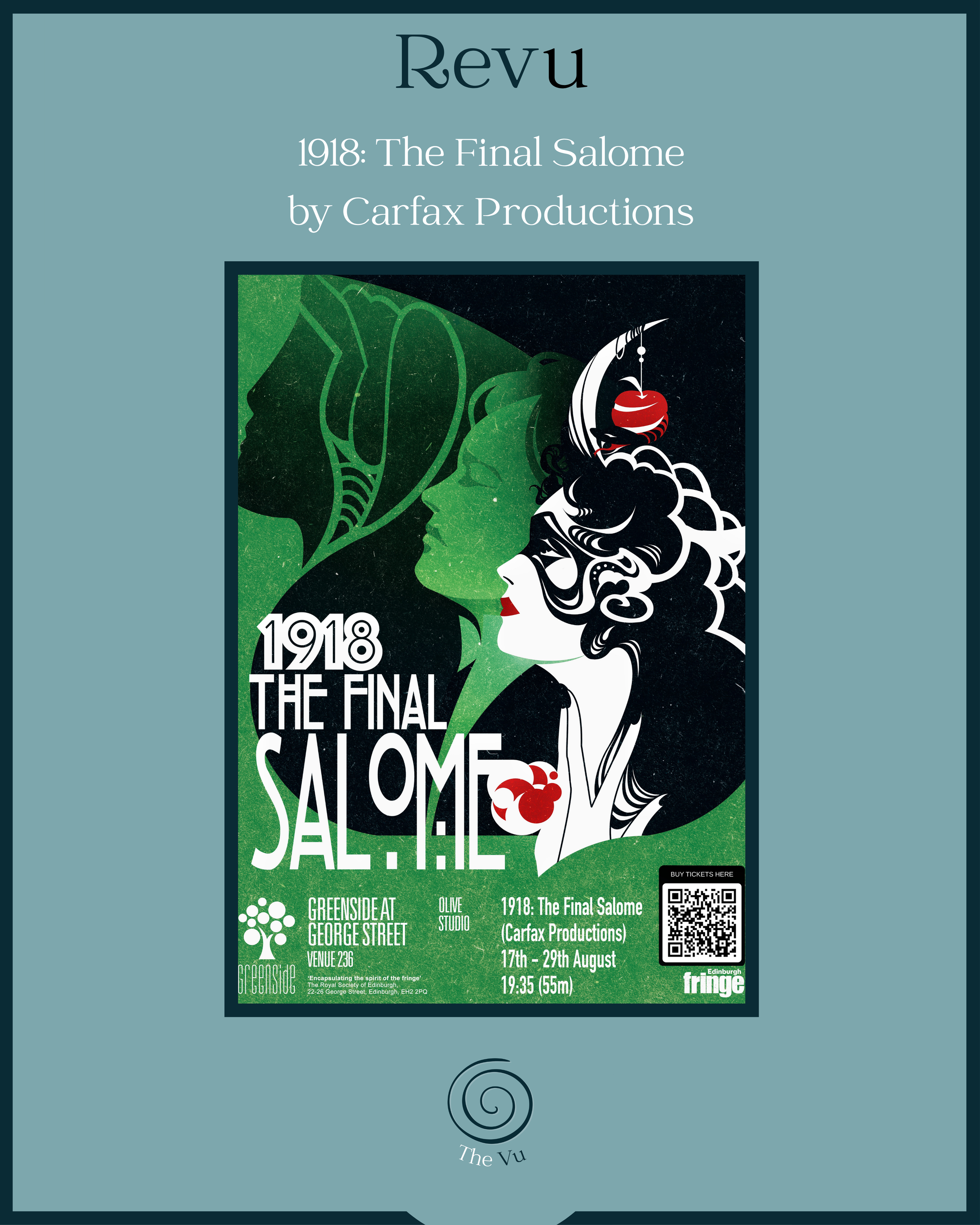
“1918: The Final Salome Poster” Poster
Strong performances and script, immense detail and a truly thorough, extensive exploration of the people surrounding Oscar Wilde in his life and death.
We follow the life, love, and death of Robert Ross (Peregrine Neger) from the perspective of Wilde’s own son, Vyvyan (George Loynes), who Robert mentored. Maud Allen (Annabelle Higgins), an actress, attempts to put on Salome which was initially performed in Paris 1896. Due to its graphic depictions of biblical characters and Wilde’s writing, there is an outcry when this is brought to the attention of Noel Pemberton-Billings (Charlie Lewis). This production balances the distress stirred by the Germans in the Great War and England’s staunch avoidance of the anything remotely homosexual or perverted (the ‘German vices’).
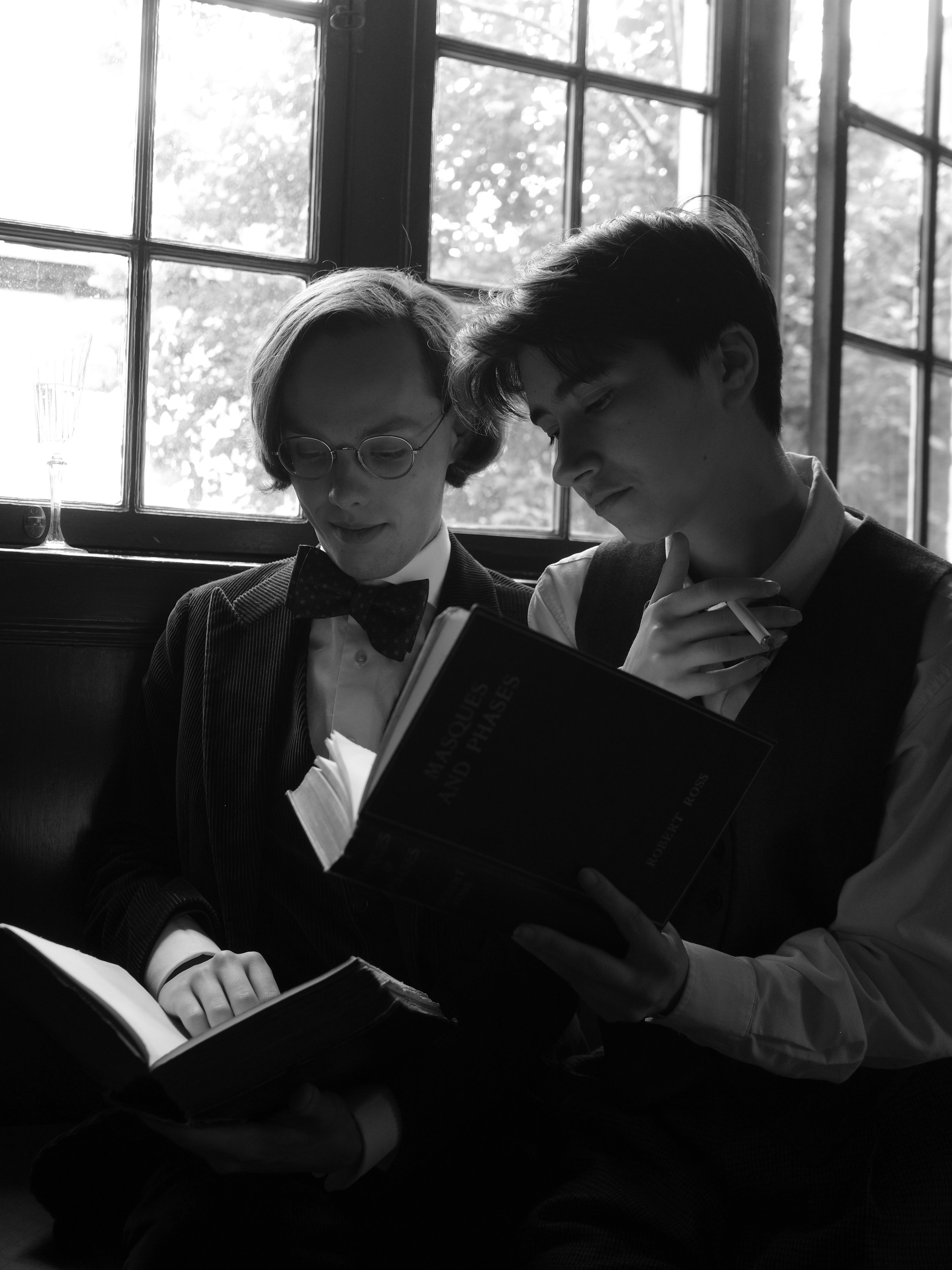
“1918: The Final Salome”
The immediate thing to observe about this piece is the extensive and loving research that must have gone into it. The historical and literary knowledge demonstrated is admirable. Whether a novice or a seasoned Wilde expert, you will learn something new. This acts as both the greatest strength but maybe a weakness of this production. A few moments of levity are needed in order to cleanse the palette and reflect.
The density of the script is valiantly welded by the cast, all five of them deliver lovely performances. Loynes acts as the narrator and sets the semi-metatheatrical tone. Timelines, consciousnesses and perspectives overlap delivering the story of Wilde and his ‘first boy’ in a mostly comprehensible way. Neger’s Robert is haunted by Ren Stefanacci embodying Boise, Loynes’ Vyvyan by Robert and on it goes. Negere’s performance is a beautifully haunting exploration of the loss of ones identity in love, a true stand out. As mentioned, though the performances are strong some moments are lost through the structure.
We are met with an initially minimal set, 2 chairs, cardboard boxes, a desk, an ornate chest and a scattering of paper. The pile of pages only grow throughout the play. At one point, a page on the floor is lifted and it’s revealed that a lot of the pages are attached together in a collage or by string. This is exciting but could have been pushed even further. An expectation of a behemoth snake made of papers covering every surface of the space was built but not quite delivered.
What this piece is missing is key moments in its narrative that stick with the audience. Plot points felt immediately overshadowed by the next one mentioned; it’s difficult to pull apart and differentiate each moment or discovery. All together, an enjoyable and intelligent play made for those with strong attention span.

“1918: The Final Salome”

3.5/5 Stars

“1918: The Final Salome”
By Rio Rose Joubert