Revu We, The Women Wild
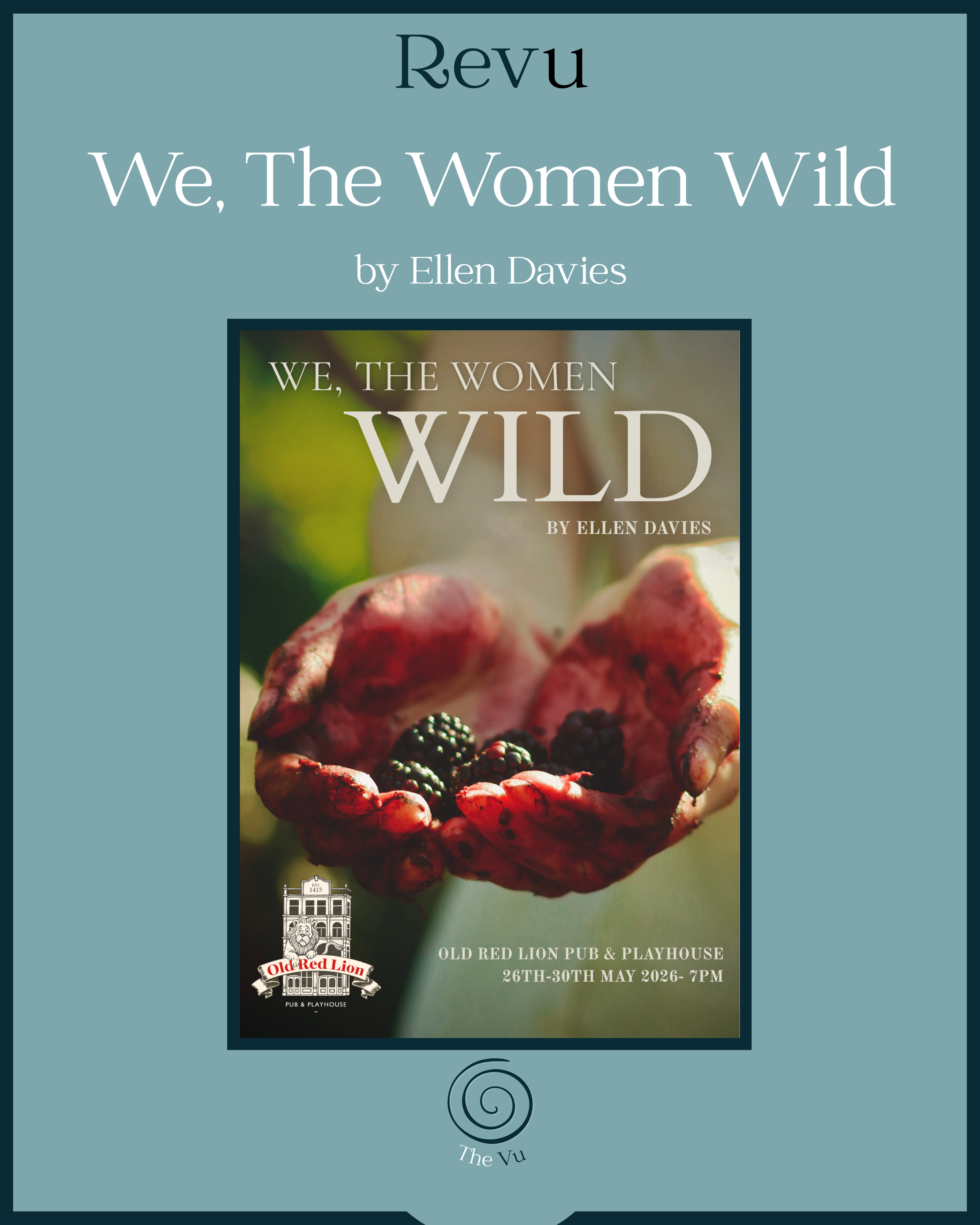
“We, The Women Wild” Poster
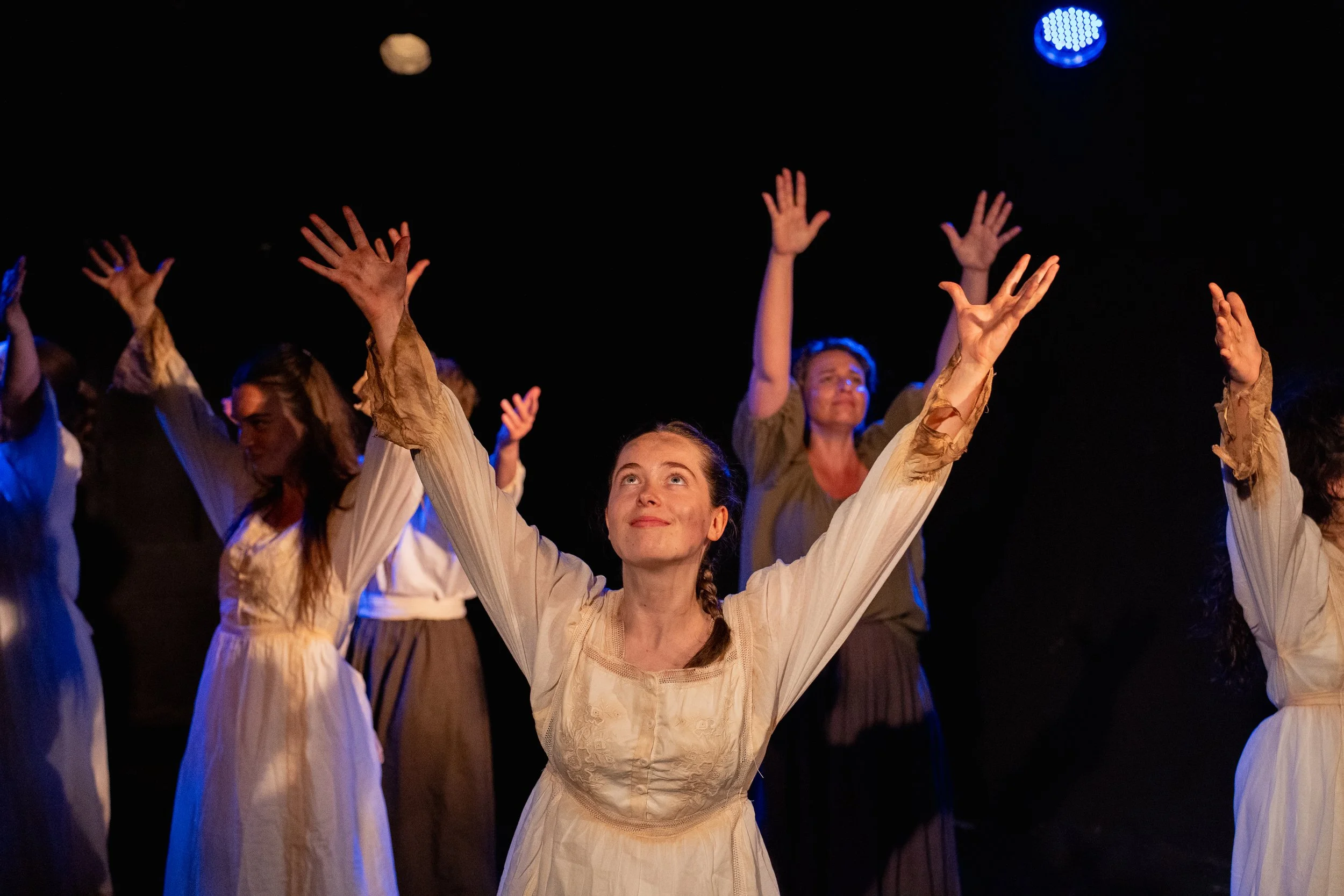
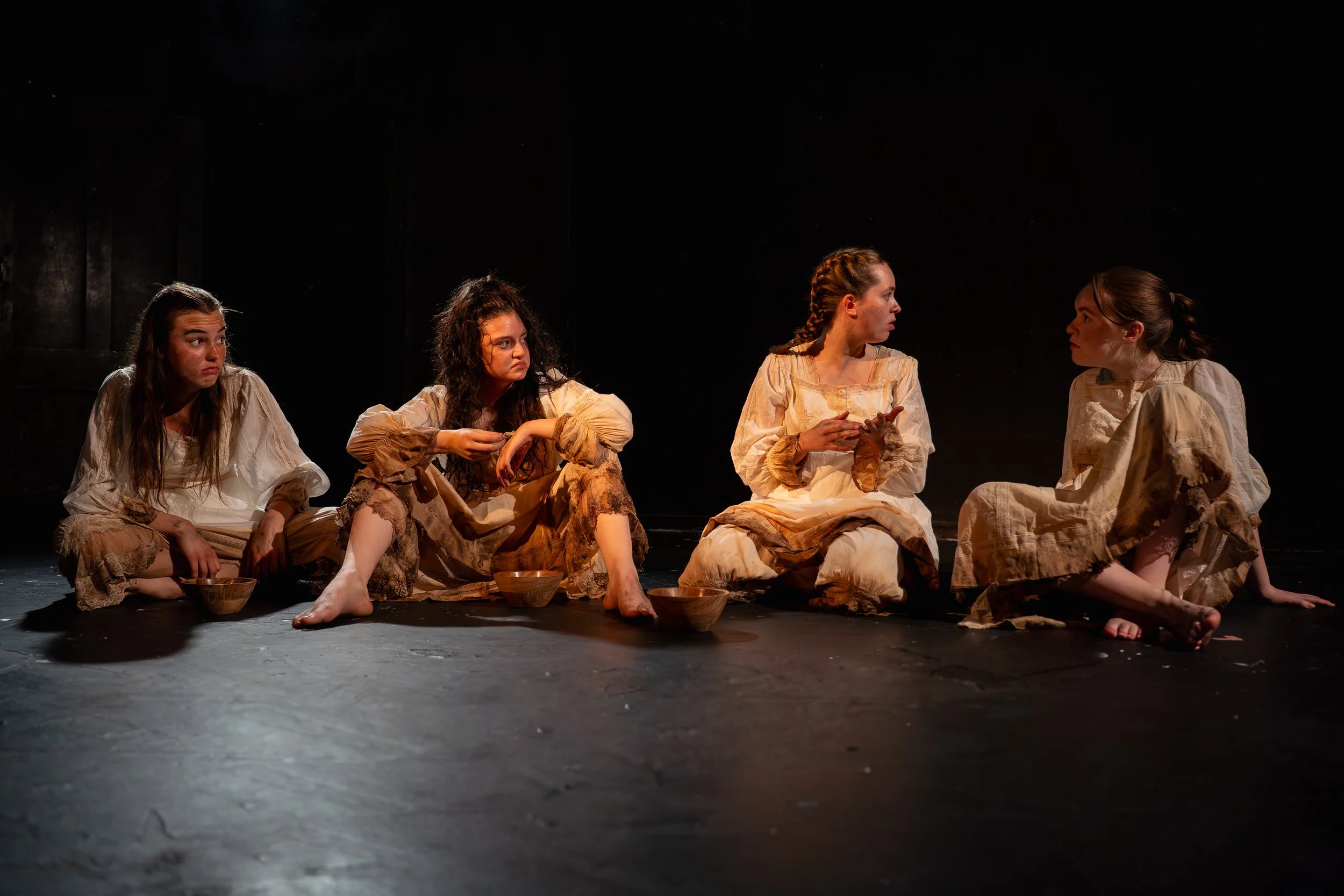
Without dialogue, without set, Ellen Davies’ new play, We, The Women Wild, starts spectacularly strong as vocalising fills the room. Primally, the show begins. Mud coated, and clad in what look like handwoven white dresses, the titular women emerge. And they are wild. They move like animals, vocalising and chanting as they roam around the stage. It is captivating. A ritual unfolds live in front of your very eyes.
It is a great moment of physical theatre, and these moments are dotted throughout the piece. Each time, the marriage of strong direction on Davies' part and strong acting on the parts of Grace Hey, Emma Kavell King, Lotus Lily and Olivia Carty are on full display.
“We, The Women Wild”
Quickly, the world is revealed. This is a small commune of women who have chosen to live away from the world in the woods and have developed their own customs and way of life. There’s currently a power shift as the leader, Nee (Taru Sinclair), may be forced to step down due to poor health and may be replaced by the second in command, Athlea (Sarah Sealey). This is much to the dismay of Raya (Grace Hey). There is a fragile peace, and one that threatens to be unraveled by the arrival of The Man (William Bennett).
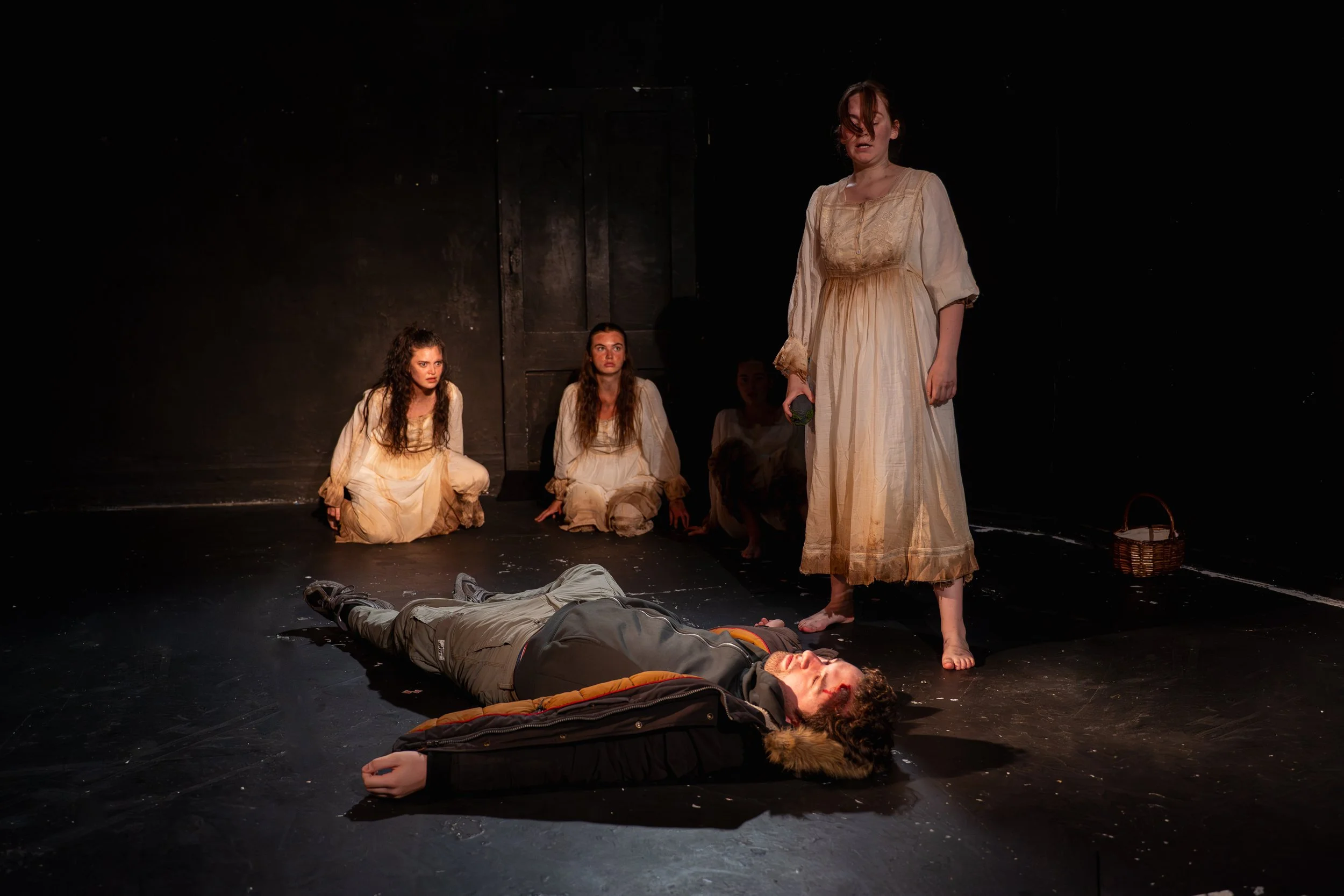
In an unexpected twist, as the younger women find him wounded in the woods, instead of helping him, Raya smashes his head with a rock. Again, it is captivating and it is an intriguing inversion on stories, such as The Little Mermaid, where our main character does not welcome this mysterious stranger with open arms. However, Raya finds herself at odds with the other younger women as they do indeed wish to help The Man and find out more about him. A very strong set up.
The second half fairs less well. There are still strong moments, such as the almost confession-like scenes between the women and The Man as they take turns watching him as their prisoner. The best example of this being Aine (Lotus Lily), who develops a fondness and fascination with The Man and in an excellent moment of showing and not telling, she returns to the main group after watching The Man with blood on her dress in an intimate area - it’s obvious what’s happened and the semiotics work fantastically to deliver understatedly what otherwise could be an over explained or over indulgent moment.
As much as it can be applauded to have a cast of such a mixed age, requiring two older actors to play the more senior members of the commune, We, The Women Wild does not justify their existence. They over explain the rules and history of the commune. The power struggle and how it affects Raya’character is something left better off-stage, as the struggle itself is far less important than how it affects Raya and her decision making directly. Time would be better spent amongst Raya and the younger women if the elder characters were either reworked or even removed.
“We, The Women Wild”
Finally, the sequence in which The Man manages to get free of his bindings and a chase ensues lands closer to something out of Benny Hill rather than something intense and daring, which tonally feels disconnected to the rest of the show. It also makes the grand speech that Althea makes about man and the world at the end - a main idea within the play - feel equally as jarring, much to the writing’s disservice.
We, The Women Wild is loaded with moments of brilliance but its shaky second half leaves it tame at times. But there is something wild here indeed. Perhaps with further revisions and a more clear focus, this piece could become something deeply entrancing.

3/5 Stars
“We, The Women Wild”
Review by Ethan H.M.M