Revu SHINJUKU
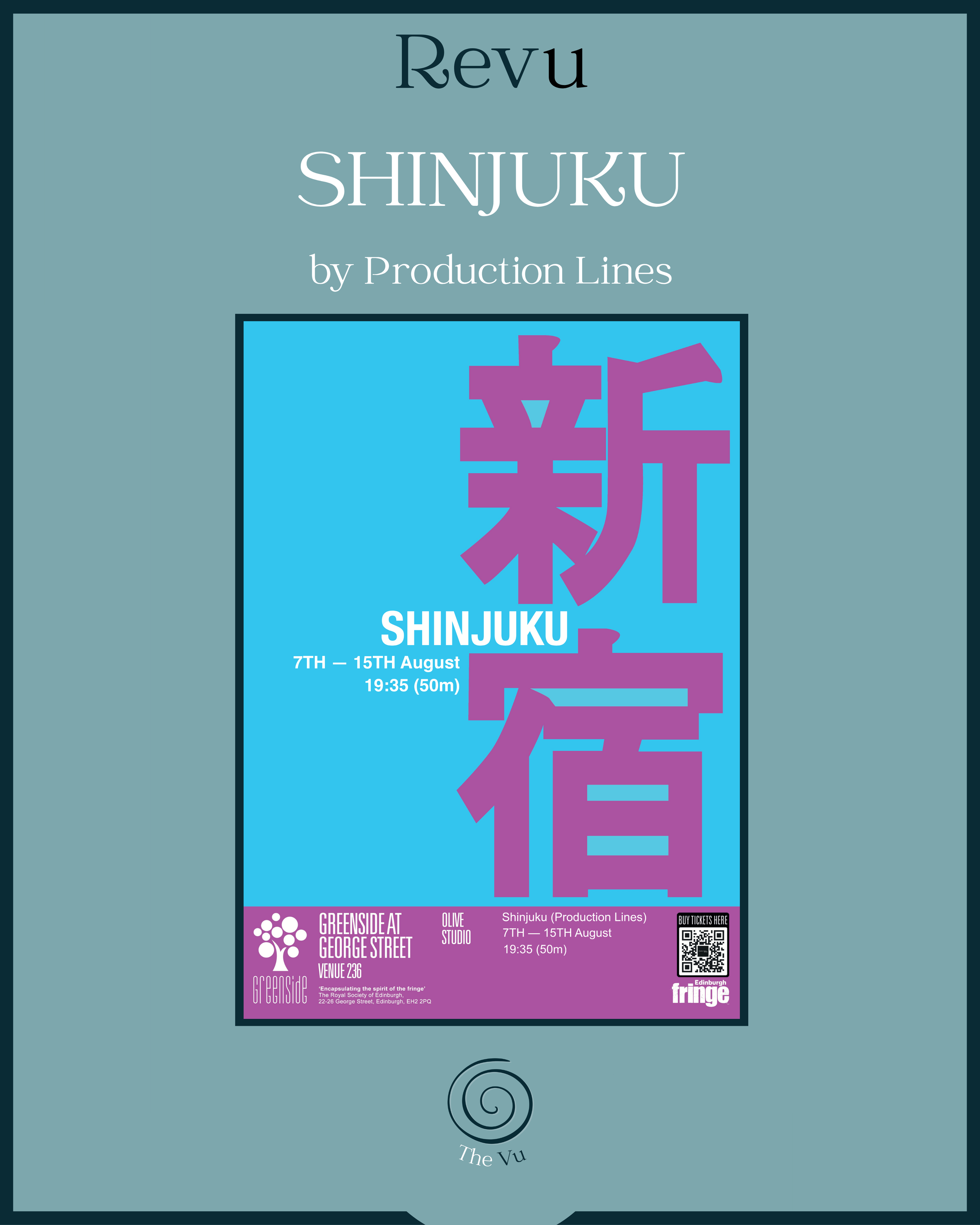
“SHINJUKU” Poster
Billed as “a darkly funny exploration of women’s choices in a man’s world,” SHINJUKU struggled to do just that.
The initial premise itself is interesting: This is a radicalisation story. A mother, Abby, is called into school to meet her son’s teacher, Toni, because he has been radicalised by the manosphere. Men being radicalised is not something new, but having it from the perspective of his mother and for the son in question, Baxter, to be so young is actually a very interesting set up. Unfortunately, there is little to no pay off to this.
Quickly the play pivots, SHINJUKU is actually about Toni, the son’s teacher and how the radicalisation of her own brother is clouding her judgement with this young boy - again, an interesting premise. But then this is sidetracked with more information about Abby and how hard the cost of living is and how hard it is to make ends meet.
Then the head teacher, Sam, is brought in and the play pivots once more. It is now about the shared and unresolved history between Sam and Abby, and how they could have had a life together. A less interesting set up and one that completely disregards the two previous ones.
One of these would have sufficed for a premise, and all three make the piece feel disjointed and unsure of what it wants to be. This is reflected in the tone as well which tries to both have comedy and also be a serious drama. This tonal whiplash is most apparent when it is revealed that Baxter, Abby’s son, may have told the school in disgust and maternal hatred that his mother was raped. A very loaded topic to even vaguely entertain in a piece already too full and one that does not get nearly enough investigation to warrant its inclusion.
Furthermore, the depiction of the manosphere feels surface level at best. Words such as “Foid” and “Looksmaxxing” are spoken aloud by the characters with the seriousness of a Sara Kane play and feel like someone using google translate for french homework. The fact that half the behaviour that Baxter is described as having, and the behaviour that warranted his mother being called into school in the first place, is him being too nice to girls is simply bewildering. If the play wanted to be a satire or full blown comedy then these stranger elements of the plot could be disregarded but it is the lumbering weight that it treats its subject matter of the manosphere with, while having a first paragraph of a wikipedia page understanding of it, that makes it feel so underserved.
To be more positive, the actors do their best and have strong moments, especially Abby. The set and sound design is simple but effective and consistent use of phone message sounds is evocative of the echo chamber driven world that we live in. The monologue in which the reasoning for the title of the play is given, is a terrific trifecta of writing, acting and direction. The play has lots of interesting ideas but neither the time nor the knowledge to do them well. If this play was redrafted and focussed, it could be very good. However, in its current state, it simply slumps.
Tickets can be found here: https://www.edfringe.com/tickets/whats-on/shinjuku

2/5 Stars
By Ethan H.M.M