Intervu Antonella Fittipaldi
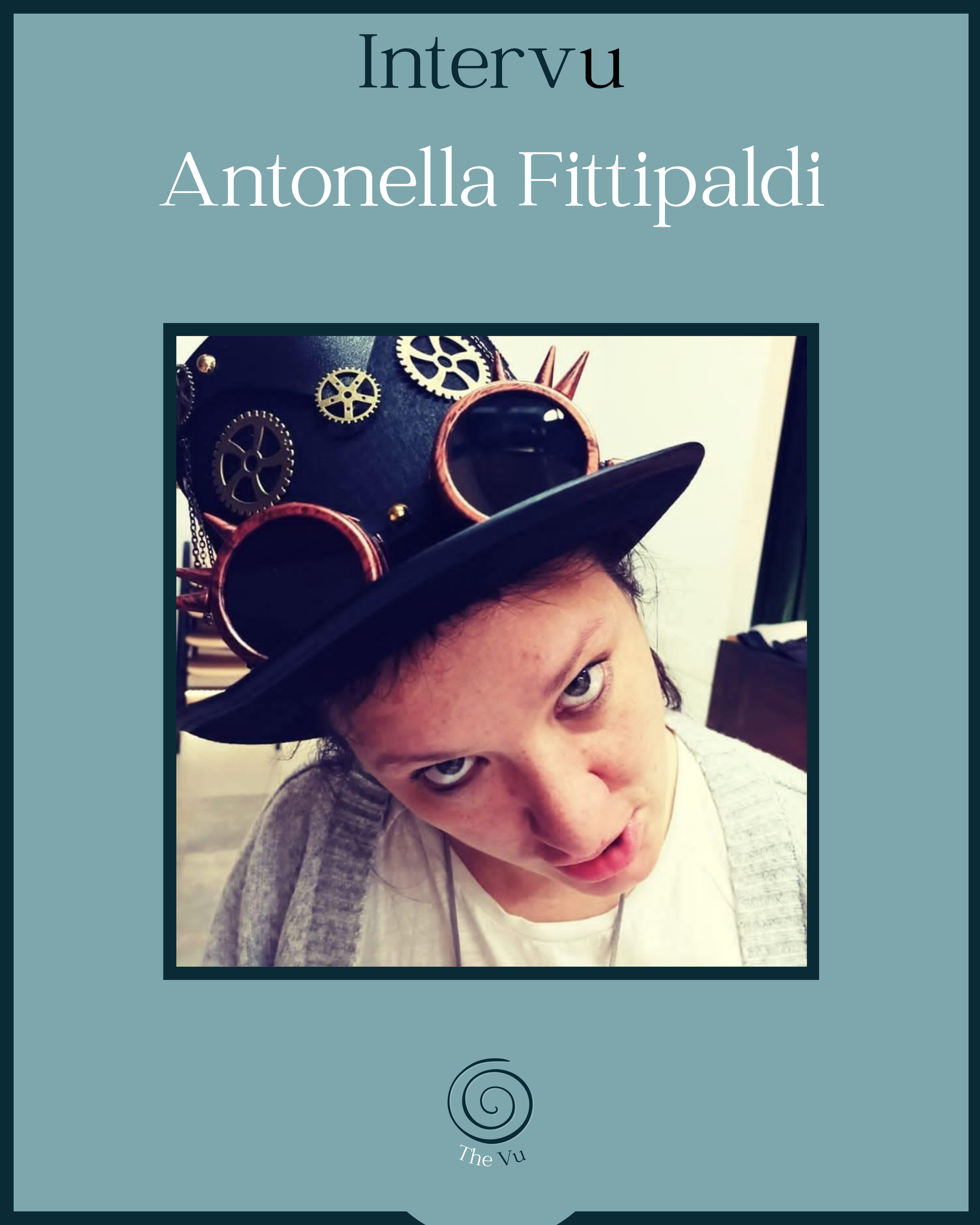
Antonella Fittipaldi
I’m talking to Antonella Fittipaldi about her theatre work and her most recent play, Scaleno, which will be at Camden Fringe this summer. We chat in Italian, so you can blame my translation for any awkwardness.
First question, who are you and what is your work?
I’m a director, actress and playwright. I’ve worked in radio for many years, and I’m a podcaster. Right now, we’re in my recording studio in Trento. I like listening to stories and telling stories. That’s why I write shows, there’s too much to say to use others’ words. I’ve done it only for Sarah Kane; I adore her.
We joke about how Sarah Kane is still, unfortunately, not very well-known in Italy.
I feel British inside. In Italy, you have to follow a million bureaucracies; in the UK, you don’t: text, synopsis, no need to justify myself. Here [in Italy], if you don’t understand something, you throw it away; you don’t stop and try understanding it.
What is your creative process?
Theatre has always been there. Everything else has only gotten in the way of the theatre. I struggle living in the real world, but my body does here, and I have to take it into account, right? You can’t live on theatre alone. I’m from Naples, from Secondigliano, a neighbourhood known for Gomorra. What I did went against everything. I talk about it in Scaleno. I’ve never talked about myself before.
How was it to move from telling others’ stories to autobiography?
Scaleno has been rewritten nine times. When you write, once it’s written, the play is no longer yours. This show has a director with a vision different from mine. If I didn’t do it, it would be like going on stage to vent. That’s how I face biography, by turning it into something that doesn’t belong to me.
Then let’s talk about your most recent work, about Scaleno.
The first time I wrote Scaleno was when I was working on Crave [by Sarah Kane], in 2008. Scaleno is the triangle with three different sides, which represents me. I stole the typical style of Crave. The characters are called A, AC and AI. But even Sarah Kane stole from Beckett; it’s a domino effect of thievery. I’m all three characters. A is the appearance and represents the present. AC is the conscious part, the one who asks all questions, they’re the past and speak Neapolitan dialect. On stage, I speak Italian, then change face, character, and speak Neapolitan dialect. Then there’s AI, who represents the future and speaks English. They’re a mix between an unconscious that knows everything [Translator’s note: in Italian, unconscious starts with I] and artificial intelligence. The story I tell in Scaleno is how tiring staying is. There’s a line: the present is the place I avoid.
Antonella jokes that she doesn’t want to write theatre for others; she’s doing this show for herself. Then I ask her, “What do you want people to take away from it?”
Had you asked me this question last year, the answer would have been completely different. What I want the audience to see is that you don’t need to be a fully resolved person. Any time a forty-one-year-old woman does a monologue, she talks about her age, or she’s a mother, or she’s divorced, and she’s a resolved person. I’m not a mother, I’m not divorced, and I’m not resolved. I’m not this theatre that has to teach something, to give something. In Scaleno, I talk a lot about normality. Normality saves you from shame, it’s one of the lines I’ve written. We want normality at all costs. I want to annoy people; I want to disturb them.
I quote the classic: art should comfort the disturbed, disturb the comfortable. Then I admit I’m biased, since all my favourite plays leave the spectator more confused than before. I ask her if there’s anything she’s excited to see herself.
After Sarah Kane, I’ve struggled finding someone else to be passionate about. And then I found Jodie Comer. There’s this show, Prima Facie. I’ve gone to see her in February in Edinburgh. I was scared. Whenever you see an idol, you always leave disappointed.
But it was incredible. It inspired me to say, I want to write Scaleno, I want to have fun too, jump like a grasshopper on stage.
I ask a vaguely selfish question: Is there space for weird theatre in Italy? Antonella hesitates and then gives me a tentative no.
I can’t find anyone who fills me with emotion. It’s not that I want quality, I need to see myself in characters, that’s why I want to tell stories about imperfection. But in Italy, I struggle to lose myself in plays, especially if they speak so solemnly.
Antonella imitates a very formal-sounding Buongiorno! and then laughs.
Who speaks like this in real life?
Translator’s note: Our country is plagued by hyper-elegant speeches, especially in the art sector. I note that it must have been liberating to work on a bilingual show, or a trilingual one, including dialect.
There will be subtitles for the Italian parts. And the Neapolitan dialect will be particularly loud, because maybe a foreigner wouldn’t recognise that I’m talking with another accent. In Naples, we would say “vrenzola,” the classic stereotype of the Neapolitan woman with an apron who shouts all day. It’s pure schizophrenia.
Any advice you would give to another creative?
Don’t make the mistake of listening to others. It sounds bad, right? I give this advice to my students: the only certainty is that you’ll live with yourself for the rest of your life. People come and go, and someone will always be disappointed. If you listen to others too much, you risk making different choices from the ones you’d have wanted.
Scaleno will be at the Camden Fringe, Libra Theatre Café from 17th to 20th August, 19.30.
By Jude Parrotta